
Welcome to Day 12
Today we ask why stress becomes suffering for some people but not for others. Read slowly in one sitting, watch the two expert videos when convenient, and carry the day’s question with you.
The shape of today
- Opening — Why stress becomes sufferingThe Journey of Life and the bridge from Samādhāna.
- The teaching — Evenness of mind and the Two ArrowsThe Gita’s Samatvam and the Buddha’s Second Noble Truth.
- Value of the day — SatiMindfulness: noticing our reactions before we are carried away by them.
- Health segment — How meaning shapes the stress responseDr Kelly McGonigal and Dr Alia Crum on stress and mindset.
- Expert insights (optional material)Two videos (about 33 minutes) on stress, mindset and meaning.
- Intentional activity — Choosing One Stress-Supportive ActionOne small action, chosen with awareness.
- Scientific quadrant and closingEvent, story and experience; Kapal Bhati and a Body Scan.
- A quiet place to read, and a pen for the reflection spaces.
- A phone or computer for the two expert videos (33 minutes).
- The Day 12 meditation audio.
Life can get busy. Take more than 21 days if you need to; there is no need to rush. If you cannot move to the next day of TLM Basic, continue practising the Value of the Day, Intentional Activity and Meditation from the last day you completed. When you are ready, resume the programme from where you left off.
Why stress becomes suffering
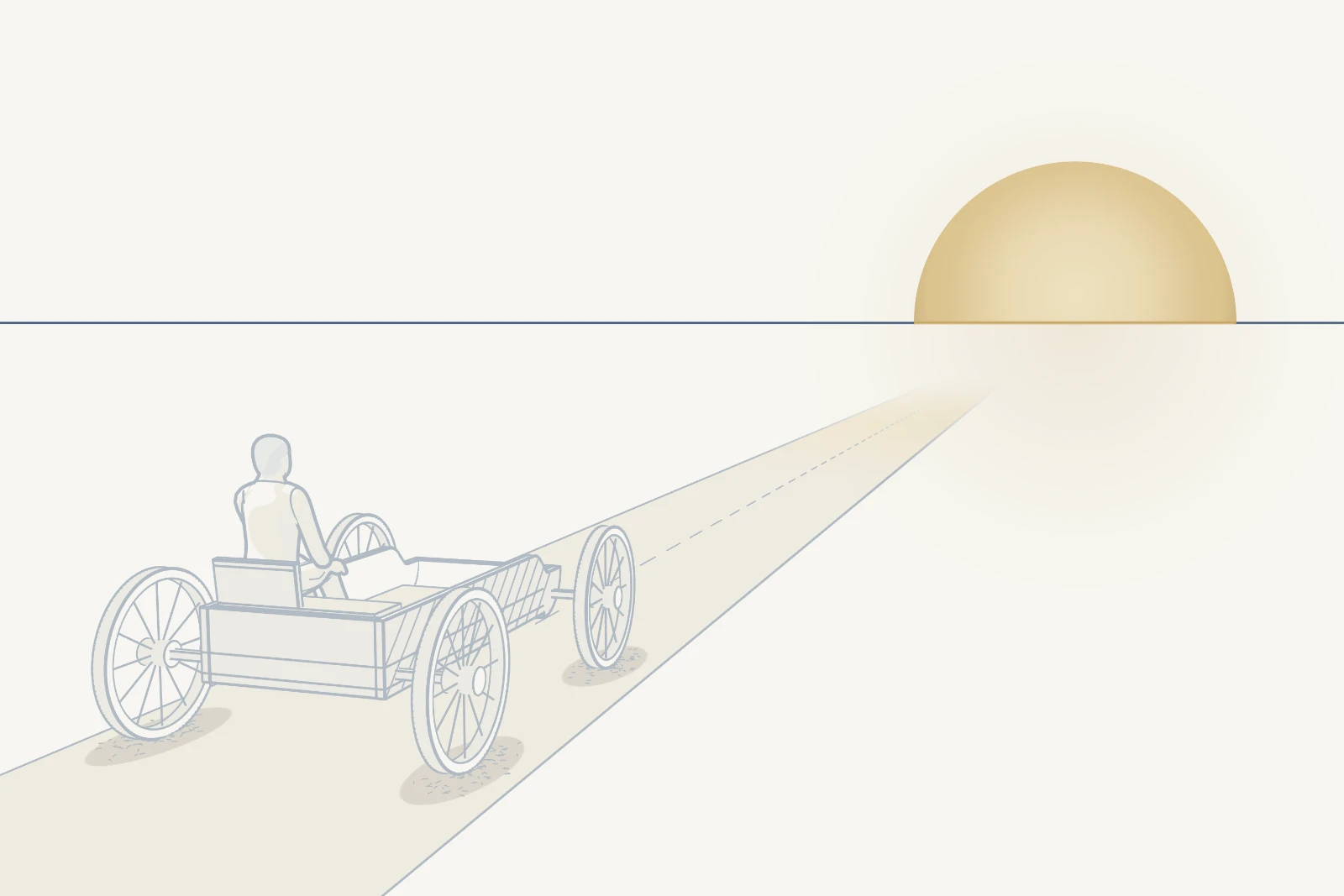
Today we take the next step.
The answer lies not only in what happens to us, but in how the mind responds. Let’s explore why.
Evenness of mind
The Pancha Kosha model helps us understand the different dimensions of our experience, from the physical body to the subtler dimensions of thought, emotion and intellect. In the previous days, we explored the physical and vital sheaths before turning to the Mental Instrument. We now continue that exploration by examining how the mind responds to life’s events and how those responses shape our experience.
How can we meet these experiences without losing our inner balance?
The Bhagavad Gita answers this with one word—Samatvam, evenness of mind.
सिद्ध्यसिद्ध्योः समो भूत्वा समत्वं योग उच्यते ॥Yogasthaḥ kuru karmāṇi saṅgam tyaktvā Dhanañjaya,
siddhy-asiddhyoḥ samo bhūtvā samatvam yoga ucyate.Established in yoga, perform your actions, O Dhananjaya, abandoning attachment and remaining even in success and failure. This evenness of mind is called yoga.Krishna’s counsel to Arjuna: act fully, and meet success and failure with an even mind.
Krishna does not promise a life without success and failure, gain and loss, praise and criticism. These are part of life. What matters is the inner balance with which we meet them.
Its impact is shaped inside us.
The Buddha’s insight
The Buddha expressed the same truth through the Second Noble Truth. Pain is inevitable. But suffering grows when the mind resists reality. We become deeply wedded to how life should unfold, how people should behave, and how events should turn out. When reality departs from these expectations, we struggle against what is happening, adding to our suffering.
- “This should not be happening.”
- “I can’t bear this.”
The struggle against reality often becomes heavier than the reality itself.
Different language. The same insight.
The Two Arrows
The Buddha illustrated this with the teaching of the Two Arrows. The first arrow is life itself—illness, loss, failure, conflict, disappointment. No one escapes it.
The second arrow is fired by the mind—the story, the resentment, the endless replaying, the resistance.
The first arrow causes pain. The second arrow creates unnecessary suffering.
Inner Governance begins when we recognise the Second Arrow before automatically firing it.
Engaged Non-Attachment (ENA) means responding wisely to the First Arrow without creating unnecessary suffering through the Second.
The second arrow arises when we react automatically to the pain life brings us.
Sati — mindfulness — helps us recognise this reaction as it arises, before we are carried away by it.
In that moment of awareness, we create a space between what happens and how we respond. That space makes a wiser response possible.
This is mindfulness in action, and a practical expression of Inner Governance.
Inner Governance and ENA
Inner Governance
“The disciplined capacity to regulate attention, emotion and behaviour even under pressure — in alignment with personal values and institutional ethos to fulfil the envisaged goal.”
Engaged Non-Attachment (ENA)
“The trained capacity to be fully present in every role you play, fully engaged in every responsibility, and fully committed in every relationship—without being defined, driven or destabilised by any one of them.”
The Buddha’s Two Arrows teaching is a practical expression of Inner Governance. The First Arrow represents life as it unfolds. The Second Arrow represents the suffering created by automatic reaction.
Engaged Non-Attachment (ENA) means engaging fully with reality without adding unnecessary suffering through resistance, attachment or mental replaying.
The ability to recognise this distinction is Inner Governance in action.
Sati
Yesterday, we explored Samādhāna—the inner steadiness that allows us to remain settled even when thoughts arise. Today, we build on that steadiness by learning to recognise what happens within us before we react.
The Buddhist tradition calls this quality Sati, commonly translated as mindfulness.
Mindfulness is the capacity to be aware of what is happening in the present moment—to notice our thoughts, emotions, bodily sensations and reactions without immediately being swept away by them.
Think of what happens when someone criticises you. Irritation may arise. The mind begins to construct a story. You may feel an urge to defend yourself, retaliate or withdraw. Often, the reaction begins before you have even recognised what is happening.
Sati helps us notice this process as it unfolds.
You recognise the irritation. You notice the thoughts accompanying it. You become aware of the impulse to react. You do not have to suppress what you feel, nor do you have to act on it immediately.
You simply become aware.
Awareness creates a pause. In that pause, a choice becomes possible.
This is the practical significance of mindfulness in the teaching of the Two Arrows. We may not be able to prevent the first arrow—the pain that life sometimes brings us. But by noticing our reactions, we may reduce the additional suffering created by resistance, rumination and habitual responses.
You have already been practising this in TLM. Each time you notice that your attention has wandered and gently bring it back, you are training the capacity to recognise what the mind is doing and redirect your attention.
Today’s Body Scan continues this practice. As you observe sensations in different parts of the body, notice any tendency to judge, resist or immediately react. There is no need to force a particular experience. Simply observe what is present, as best you can.
Throughout today, pause occasionally and ask yourself four questions:
- What am I thinking right now?
- What am I feeling right now?
- How am I responding to what is happening?
- Is my response aligned with what truly matters to me?
Do not use these questions to criticise yourself. Use them to see more clearly.
Mindfulness does not mean withdrawing from life or becoming passive. It means being present enough to respond consciously rather than being driven automatically by every thought, emotion or impulse.
As this capacity develops, we become better able to govern our attention, regulate our emotions and choose our actions in keeping with our values.
That is Sati in practice—and a step towards Inner Governance.
How meaning shapes the stress response
Today we ask a different question. Is stress itself the problem, or does our relationship with stress also matter?
Dr Kelly McGonigal, in her talk How to Make Stress Your Friend, explains how viewing the body’s stress response as preparation for a challenge may change how we respond. She also highlights an often-overlooked aspect of stress: it can motivate us to reach out to others, seek support and connect.
A study by Keller and colleagues (2012) found that people reporting high stress who also believed stress harmed their health had an increased risk of premature death. This observational finding does not prove that changing our beliefs improves health, but it suggests that our beliefs about stress may matter.
Dr Alia Crum and colleagues (2017) experimentally studied stress mindsets and found differences in some psychological and hormonal responses when participants were encouraged to view stress as enhancing rather than debilitating. These findings suggest that mindset can influence aspects of the stress response, although outcomes vary.
The situation may remain the same, but how we interpret and respond to it can differ.
Part 2 — Bringing it together
Research by Keller and colleagues, Dr Kelly McGonigal, and Dr Alia Crum offers different insights into how our beliefs and interpretations may influence our relationship with stress.
Stress is part of life. What matters is also how we understand and respond to it.
That brings us back to today’s value: Sati — mindfulness. Mindfulness helps us notice what is happening before fear, resistance or catastrophising take over.
Awareness may not change the event, but it can change how we respond.
Ancient wisdom and modern science on stress and suffering
Suffering often begins with the second arrow we fire ourselves.
Modern psychology and behavioural science arrive at a remarkably similar conclusion. The events we experience matter. But the way we interpret, relate to and respond to those events often matters just as much.
The following expert insights explore how our mindset, interpretation and response can influence the way stress affects our lives.
Notes as you watch
How to Make Stress Your Friend
Kelly McGonigal challenges a common assumption: that stress is always harmful. Her work suggests that our beliefs about stress may influence how we experience and respond to it.
As you watch, notice how the meaning we assign to stress can sometimes become more important than the stressor itself.
Reflection
Which aspect of stress causes you more difficulty: the challenge itself, or your reaction to the challenge?
Rethinking Stress
Dr Crum’s 2013 study is the primary research that changed Dr McGonigal’s thinking on stress. Watching both talks together gives the complete picture.
Dr Alia Crum’s research explores how mindsets shape human experience. Her work suggests that the way we interpret stress can influence our behaviour, resilience and wellbeing.
As you watch, reflect on how two people can experience the same situation very differently based on the meaning they assign to it.
Reflection
Can you recall a difficult experience that later proved beneficial in some way? What changed—the event or your interpretation of it?
Before moving to today’s Intentional Activity, pause for a moment.
The Buddha taught that suffering often arises not from the First Arrow, but from the Second. Modern behavioural science suggests something similar: events matter, but the meaning we assign to events matters too.
Inner Governance begins when we recognise that we may not always control what happens. But we can influence how we relate to what happens. That possibility creates freedom.
Carry that reflection into today’s Intentional Activity.
Choosing One Stress-Supportive Action
Today’s Intentional Activity is called Choosing One Stress-Supportive Action.
- First, simply notice your usual reaction. Do you worry, withdraw, become irritable, or try to control everything? Don’t judge it—just notice it.
- Next, choose one small action that supports you instead of feeding the stress. It could be calling someone you trust, taking a short walk, completing one important task, or spending a few quiet minutes in nature.
- As you do it, pause and remind yourself: “This is how I choose to meet stress today.”
Every conscious choice you make today strengthens Sati—your capacity for mindfulness, responding with awareness instead of reacting automatically.
Behavioural science of health and wellbeing
The Scientific Quadrant explains contemplative practices through current scientific understanding of psychology, behavioural science and neuroscience. The mechanisms described indicate how these practices may influence attention, emotional regulation, behaviour and wellbeing. Scientific understanding continues to evolve, and these explanations are not guarantees of specific outcomes. Individual experiences may vary.
Why the same event affects different people differently
Two people may face the same challenge.
- A health setback.
- A professional disappointment.
- A difficult conversation.
Yet their responses can be remarkably different. Behavioural science suggests that the event itself is only part of the story. What often matters equally is how the mind interprets the event.
Psychologists refer to this process as cognitive appraisal—the meaning we assign to what happens.
The story between the event and the emotion
When something happens, the mind rapidly asks questions:
- Is this dangerous?
- Is this unfair?
- Can I handle it?
- What does this mean about me?
- What might happen next?
The answers we give—often automatically—shape our emotional response.
The same event can therefore be experienced as:
- a threat or a challenge,
- a catastrophe or a setback,
- a failure or a lesson.
The event may be identical. The interpretation may be very different.
One person may see a setback as evidence of failure. Another may see it as feedback for growth. The external event is similar. The internal appraisal is different.
How today’s practices support Inner Governance
| Practice | Behavioural function supported |
|---|---|
| Two Arrows Reflection | Distinguishing event from interpretation |
| Sati (Mindfulness) | Awareness of automatic mental reactions |
| Stress Mindset Teaching | More flexible appraisal of challenges |
| Meditation Practice | Creating space before reacting |
Brain Behaviour Experience
| Level | What may develop through practice? | What you may notice |
|---|---|---|
| Brain | Greater flexibility in evaluating experiences | Less automatic threat perception |
| Behaviour | More thoughtful responses under pressure | Reduced impulsive reactions |
| Experience | Increased resilience and emotional balance | Less suffering created by rumination |
Inner Governance, ENA and cognitive appraisal
Inner Governance involves becoming aware of the interpretations the mind automatically creates. Sati, or mindfulness, helps us notice these interpretations before accepting them as reality. With mindful awareness, we can examine our thoughts and stories rather than being carried away by them. This creates greater freedom in how we respond to life’s challenges.
Engaged Non-Attachment (ENA) does not mean avoiding difficult experiences. It means engaging fully with reality while maintaining enough inner clarity to avoid becoming trapped by every interpretation, fear or prediction generated by the mind.
In this way, awareness helps transform reaction into response.
Scientific takeaway
The mind creates interpretations.
Awareness creates choice.
The practice of Inner Governance is learning to recognise that choice before reacting automatically.
- Pain is part of life; suffering often begins with the second arrow we fire ourselves.
- The event happens outside us; its impact is shaped inside us. The Gita calls the answer Samatvam, evenness of mind.
- Sati, or mindfulness, helps us notice automatic reactions. Awareness creates a pause, and in that pause choice becomes possible.
- Stress is not automatically harmful; the meaning we give it influences how the body responds.
- Between an event and our experience lies the story the mind creates.
Before the response becomes automatic
The practice of Sati begins by noticing the mind’s response before it becomes automatic.
In today’s meditation, you will first practise Kapal Bhati, followed by a Body Scan. One awakens attention; the other cultivates deep relaxation with awareness.
Meditation — Body ScanPress play on the meditation audio, sit comfortably, and simply practise.Simply follow the guidance and stay within your comfort throughout.
Use the course meditation recording for the guided practice. The timer below is a quiet companion for practising on your own.