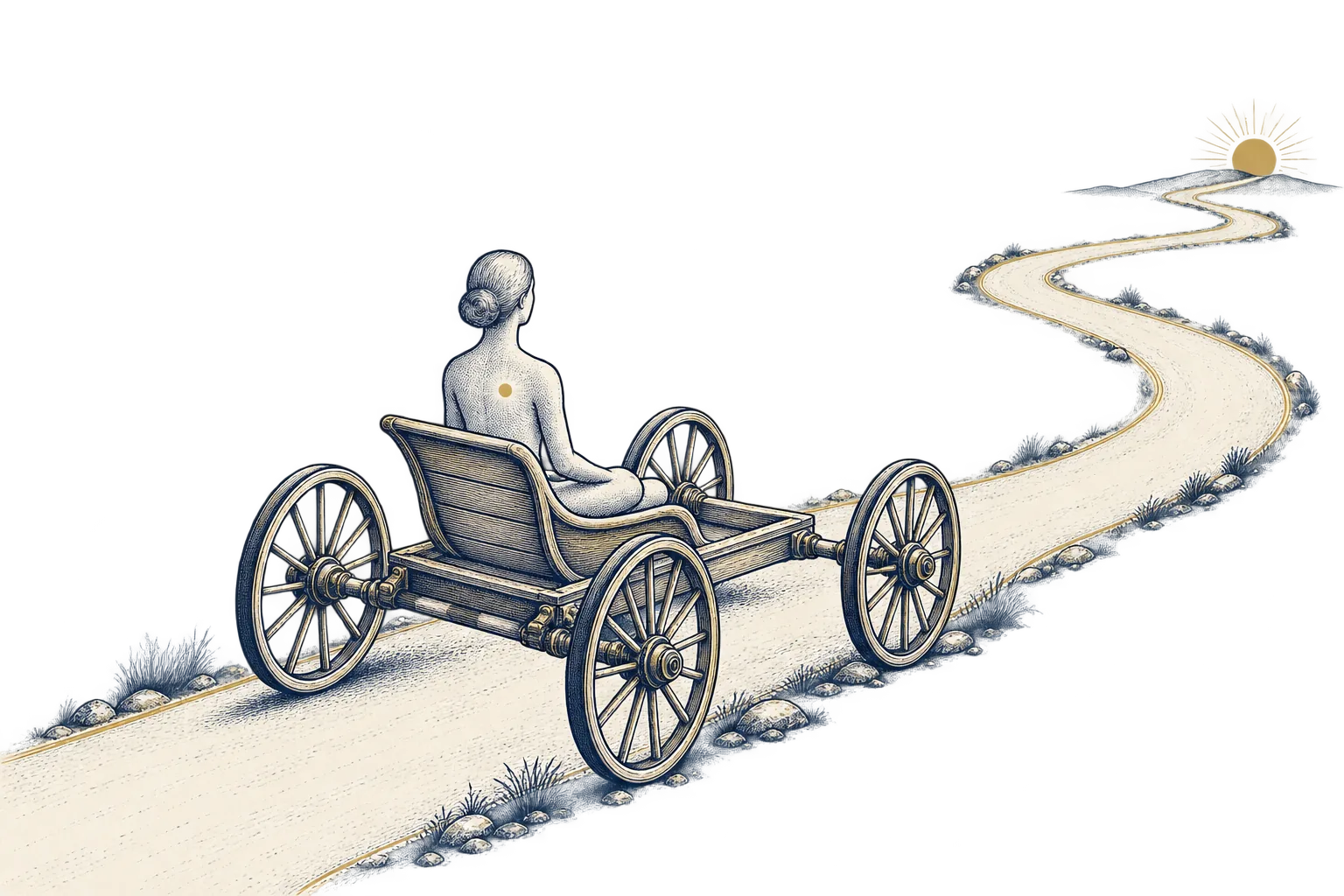
Welcome to Day 8
Week 2 turns to the Instrument through which the journey is made. Read at your own pace, watch the two short expert videos when you reach them, and close with today’s breathing practice and meditation.
The shape of today
- The central messageSmall acts of neglect create disease. Small acts of care create health.
- Balance across the wisdom traditionsThe Gita’s moderation, the Buddha’s veena and Apramāda.
- Ahimsa: not harming ourselvesValue of the day. Intelligent, consistent care of the body and mind.
- The silent architecture of cardiovascular diseaseHealth segment. Why heart disease is slow, silent and progressive.
- Expert insights (optional material)Two short videos on prevention and longevity, and one recommended book.
- One Conscious Health ChoiceIntentional activity. Two or three quiet minutes at the end of the day.
- The scientific quadrant, then meditationThe Knowledge–Action Gap; then Box Breathing and Ānāpānasati.
- A quiet place to read, and a pen for the reflection page.
- A phone or screen for two short expert videos, about twenty-two minutes.
- The Day 8 meditation audio: Box Breathing (4:4:4:4) and Ānāpānasati.
Life can get busy. Take more than 21 days if you need to; there is no need to rush. If you cannot move to the next day of TLM Basic, continue practising the Value of the Day, Intentional Activity and Meditation from the last day you completed. When you are ready, resume the programme from where you left off.
Small acts of neglect create disease.
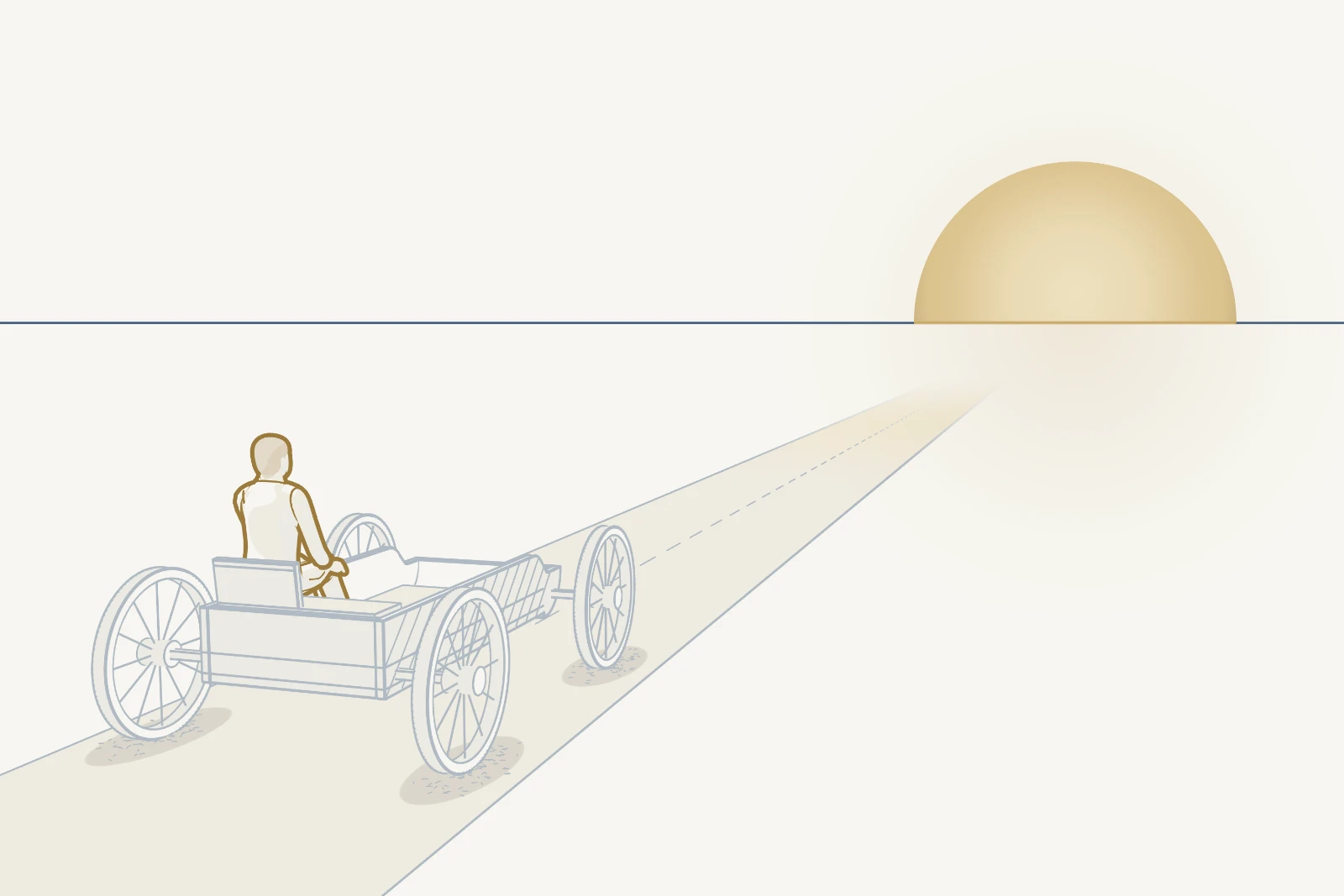
Welcome to Week 2, Day 8 of TLM.
Over the past seven days, we explored the foundations of this journey of life. We discovered the Traveller, understood the Goal, clarified the Path, and examined the Vehicle through which we engage with life. Along the way, you also began practising the five tools that gradually cultivate Inner Governance.
Inner Governance
“The disciplined capacity to regulate attention, emotion and behaviour even under pressure — in alignment with personal values and institutional ethos to fulfil the envisaged goal.”
This week, our attention shifts to something equally important—the Instrument through which this entire journey unfolds.
Your body and the mind are not who you are. But they are the instruments through which you think, feel, decide, work, love and serve. If these instruments are neglected, they themselves become a source of disturbance. If they are cared for wisely, they support every dimension of your life.
That is the purpose of Week 2.
During the next seven days, we will first learn how to strengthen the physical instrument through preventive health, movement, nutrition and rest. We will then turn to the mental instrument, learning practical ways to reduce stress, strengthen attention and build resilience.
This work is not separate from your inner journey. It supports it.
Let us begin.
Balance before growth
Before we aspire to higher levels of growth, the instrument through which that growth takes place must be cared for.
- The body is not an obstacle to the journey.
- The mind is not an obstacle to the journey.
To understand the relationship between the Instrument through which we live and act, and the Traveller—the awareness that observes our experience—we can draw on the traditional model of the five sheaths, known as the Pancha Kosha, described in the Taittirīya Upanishad. The model presents the human being through five interrelated layers, from the physical body to the innermost sheath associated with bliss. The sheaths are part of the Instrument; the awareness that knows them is the Traveller.
Today, we begin with the outermost sheath, the Annamaya Kosha, associated with the physical body. Our focus is preventive care of this physical instrument.
Moderation in the Bhagavad Gita
The Bhagavad Gita expresses this beautifully.
In Chapter 6, Verse 17, Lord Krishna says that Yoga is for the one who is moderate in food, in activity, in effort and in rest.
Notice the emphasis. Before speaking of higher states of meditation, the Gita speaks of balance. Not excess. Not neglect. Balance.
This is a principle that extends far beyond physical health. It is a way of living that allows clarity to emerge naturally.
The Middle Path
Gautam, the Buddha, called it The Middle Path, after experiencing the luxurious life of a prince and severe austerities as a monk.
Apramāda — heedfulness
The Jain tradition expresses the same wisdom through the principle of Apramāda—heedfulness or vigilant awareness. It teaches that suffering rarely begins with one dramatic mistake. More often, it arises through countless small acts of carelessness repeated day after day.
A little less sleep than we need. A little more food than we require. A little less movement. A little more stress than we acknowledge.
None of these seem significant on a single day. But over months and years, they shape the quality of both body and mind.
Different traditions express this in different ways. Yet they point towards the same understanding. Caring for the body and mind is not self-indulgence. It is responsible stewardship of the instrument through which every experience of life unfolds.
Ahimsa
The value that anchors today’s practice is Ahimsa. Most of us understand Ahimsa as non-harming—refraining from causing unnecessary harm to other living beings.
Today, let us look at another dimension. Ahimsa also means not harming ourselves. The body and mind entrusted to us deserve intelligent care. When we repeatedly ignore the body’s need for rest… When we eat without awareness… When we neglect movement… When we allow chronic stress to become our normal way of living… we are slowly harming the very instrument that supports every aspect of our lives. Recognising this is not about guilt. It is about awareness.
There is another misunderstanding we should avoid. Practising Ahimsa towards ourselves does not mean becoming obsessed with health. It does not mean striving for perfection. It does not mean feeling guilty every time we make an unhealthy choice. That too becomes a form of harm.
Ahimsa asks for something much simpler. Treat your body and mind with the same care and respect that you would give to anything precious entrusted to you. Not occasionally. Consistently.
Practising Ahimsa today means noticing where your daily habits may be quietly harming your well-being… and making one small choice that reduces that harm. Small choices. Made consistently. That is where lasting change begins.
All of this naturally leads to an important question. If caring for the Instrument is so important… what actually happens when we neglect it? Modern preventive medicine has given us a remarkably clear answer. And that is where we now turn.
The silent architecture of cardiovascular disease
This week, we will explore the major chronic diseases that shape the health and longevity of millions of people. Today, we begin with the heart and our metabolic health.
Most people think of heart disease as a sudden event—a heart attack, a stroke, something dramatic that arrives without warning.
Modern cardiology tells us something very different. Heart disease is not sudden. It is slow, silent, and progressive. The underlying disease process can develop over many years, often before symptoms become apparent. Some people have no recognised warning symptoms before a serious cardiac event. In others, symptoms may be subtle, overlooked or mistaken for something else. The absence of obvious symptoms does not necessarily mean the absence of cardiovascular disease.
Understanding this changes everything about how we relate to cardiovascular health. It shifts our attention from emergency treatment to intelligent prevention. That is why we begin Week 2 here.
Read on not with fear, but with the confidence that comes from understanding what can be changed.
Three upstream processes
In The 30-Day Heart Tune-Up, Dr. Steven Masley highlights three important upstream processes relevant to cardiovascular prevention—metabolic syndrome, chronic inflammation and lifestyle mismatch. These are useful lenses for understanding risk, alongside cholesterol and other established cardiovascular risk factors.
1The first is metabolic syndrome.
Dr. Masley describes metabolic syndrome—a combination of insulin resistance, rising blood sugar, increasing waist circumference, high triglycerides, and low HDL cholesterol—as one of the strongest drivers of modern cardiovascular disease. Heart disease and type 2 diabetes are often two expressions of the same underlying metabolic imbalance. That is why a person may have apparently acceptable cholesterol levels and still remain at significant cardiovascular risk.
2The second is chronic inflammation.
Many heart attacks occur not because an artery has gradually become completely blocked, but because a small, inflamed plaque suddenly ruptures and forms a clot. Chronic inflammation is fuelled by poor diet, physical inactivity, inadequate sleep, and prolonged psychological stress. This is one of the important ways in which the state of the mind influences the health of the heart.
3The third is lifestyle mismatch.
Our biology evolved for regular movement, wholesome food, restorative sleep, and manageable periods of stress. Modern life often gives us prolonged sitting, ultra-processed food, fragmented sleep, and continuous mental pressure. The result is a growing mismatch between the body we inherited and the life we now live. Dr. Masley’s message is encouraging: this mismatch is not inevitable, and much of the damage can be prevented—or even reversed—when recognised early.
Ancient wisdom and modern preventive medicine
The first was Apramāda—living with awareness and vigilance rather than drifting through life unconsciously.
The second was that health is often shaped by small daily choices that accumulate over time.
Modern preventive medicine has arrived at a remarkably similar conclusion.
Many of the diseases that affect us later in life do not appear suddenly. They often develop silently over years through a gradual accumulation of risk factors, habits and lifestyle choices.
The following expert insights explore this idea from the perspective of contemporary medical science. As you watch, notice how these scientific perspectives complement today’s teachings on awareness, self-care and conscious living.

Tools for Avoiding Heart Attack & Heart Disease
Practical approaches to reducing cardiovascular risk and improving long-term health outcomes.
Reflection
What is one risk factor or health habit in your own life that deserves greater attention today rather than years later?

A New Vision for Living Longer and Better
One of the top 10 most-cited researchers in medical history; author of Super Agers. Dr Eric Topol shares a new vision for living longer and better: healthy ageing, prevention and the emerging science of longevity.
Reflection
What does “living longer and better” mean to you personally? Which daily habits are most aligned with that vision?
Dr Steven Masley — The 30-Day Heart Tune-Up
For participants who wish to explore preventive cardiovascular health in greater depth, this book offers practical guidance on nutrition, movement, stress management and lifestyle choices that support long-term heart health.
Integration reflection
Before moving to today’s Intentional Activity, pause for a moment.
- The wisdom traditions encourage us to live with awareness.
- Preventive medicine reminds us that disease often develops gradually.
- Longevity science reminds us that healthy ageing is influenced by the choices we make today.
Together, they point toward a common insight:
Carry that reflection into the remainder of today’s practices.
One Conscious Health Choice
At the end of the day, spend just two or three quiet minutes asking yourself one question:
- Perhaps you chose to take a short walk.
- Perhaps you stopped eating when you were comfortably full.
- Perhaps you slept a little earlier.
- Perhaps, in a stressful moment, you paused before reacting.
Any one of these counts.
Why is this important? Because lasting change rarely begins with dramatic transformation. It begins with one conscious choice. Behavioural science consistently shows that when we recognise our ability to make even one positive choice, we become more confident about making the next one.
Health is rebuilt in exactly the same way that it is lost—through small choices, repeated consistently, over time. If, at the end of today, you feel that you made no health-supporting choice, simply notice that honestly. That awareness itself is the beginning of change.
This evening — two or three quiet minutes
Behavioural science of health and wellbeing
The Scientific Quadrant explains contemplative practices through current scientific understanding of psychology, behavioural science and neuroscience. The mechanisms described indicate how these practices may influence attention, emotional regulation, behaviour and wellbeing. Scientific understanding continues to evolve, and these explanations are not guarantees of specific outcomes. Individual experiences may vary.
The Knowledge–Action Gap
Most people already know what supports health.
They know that movement is beneficial. They know that sleep matters. They know that healthier food choices are generally better than unhealthy ones.
Yet knowledge alone rarely changes behaviour.
Behavioural science calls this the Knowledge–Action Gap—the distance between knowing what is right and actually doing it consistently.
The challenge is therefore not merely acquiring information. The challenge is converting awareness into action.
How today’s practices support behaviour change
| Practice | Behavioural function supported |
|---|---|
| Reflection on Ahimsa | Greater awareness of self-care and self-harm |
| One Conscious Health Choice | Development of self-efficacy |
| Box Breathing | Improved pause between impulse and action |
| Ānāpānasati Meditation | Increased awareness of automatic habits and reactions |
Awareness → Choice → Action → Habit → Long-term wellbeing
Behaviour change often begins with awareness. Awareness creates the possibility of choice. Repeated choices gradually become habits. Healthy habits, practised consistently, can contribute to long-term wellbeing.
This is why today’s practices focus not on perfection, but on conscious action.
Scientific takeaway
The greatest obstacle to health is often not lack of knowledge. It is the gap between knowing and doing.
Today’s practices help narrow that gap by cultivating awareness, deliberate choice and consistent action.
The goal is not to transform your life in a day. The goal is to take one conscious step and then repeat it tomorrow.
- The body and mind are the Instrument; they deserve intelligent care.
- Balance, not excess or neglect: the well-tuned string of the Middle Path.
- Ahimsa includes not harming ourselves—care, not guilt or perfection.
- Heart disease is slow and silent; prevention begins years earlier.
- One conscious choice, repeated, narrows the gap between knowing and doing.
Care rather than neglect
It is usually the visible outcome of invisible processes that have been unfolding quietly for years. The encouraging news is that these upstream processes can often be influenced long before disease becomes apparent.
One of the physicians who has helped shape modern thinking on preventive medicine is Dr. Peter Attia. He proposes that much of modern medicine spends its energy treating disease after it has appeared, whereas the greater opportunity lies in preventing it decades earlier. To help us think this way, he describes four major chronic diseases that account for most suffering and premature death in later life—the “Four Horsemen”: cardiovascular disease, cancer, neurodegenerative disease, and metabolic disease.
Today we began with the first of these. Tomorrow, we will broaden our understanding by exploring how these conditions are interconnected and what they teach us about living a longer, healthier life.
Until then, treat your Instrument with Ahimsa—care rather than neglect, awareness rather than habit. Small choices, repeated consistently, shape the future long before the future arrives.
Meditation — Ānāpānasati (breath awareness)Press play on the meditation audio, sit comfortably, and simply practise.Your meditation is waiting. Press play.
Use the course meditation recording for the guided practice. The timer below is a quiet companion for practising on your own.