
Welcome to Day 3
Read the teaching on Happiness, Peace and Bliss, then bring Pause, Breathe, Choose into your day. Use the closing meditation and the reflection page to connect the ideas with your own experience.
The shape of today
- Opening — Revisit the Traveller and turn towards the Goal.The Journey of Life returns; today the enquiry moves to its second element.
- The teaching — Explore Happiness, Peace and Bliss.The hedonic treadmill, the lake beneath the waves, and a fullness that is uncovered rather than created.
- Value of the day — Practise Tapas through conscious choice.The fork in the road: immediate comfort or long-term growth, one choice at a time.
- Intentional activity — Pause, Breathe, Choose at least three times today.Create a moment of space between what happens and how you respond.
- Scientific quadrant — Read the scientific account of seeking, noticing and self-regulation.The reward, executive control and salience networks, and why repetition matters.
- Closing — Follow the meditation and reflect on your day.Nadi Shodhana and Belly-Focused Mindfulness, then the reflection page.
- A quiet place to read and sit comfortably.
- A pen for the reflection page.
- Today’s 15-minute meditation audio: Nadi Shodhana and Belly-Focused Mindfulness.
Life can get busy. Take more than 21 days if you need to; there is no need to rush. If you cannot move to the next day of TLM Basic, continue practising the Value of the Day, Intentional Activity and Meditation from the last day you completed. When you are ready, resume the programme from where you left off.
From the Traveller to the Goal
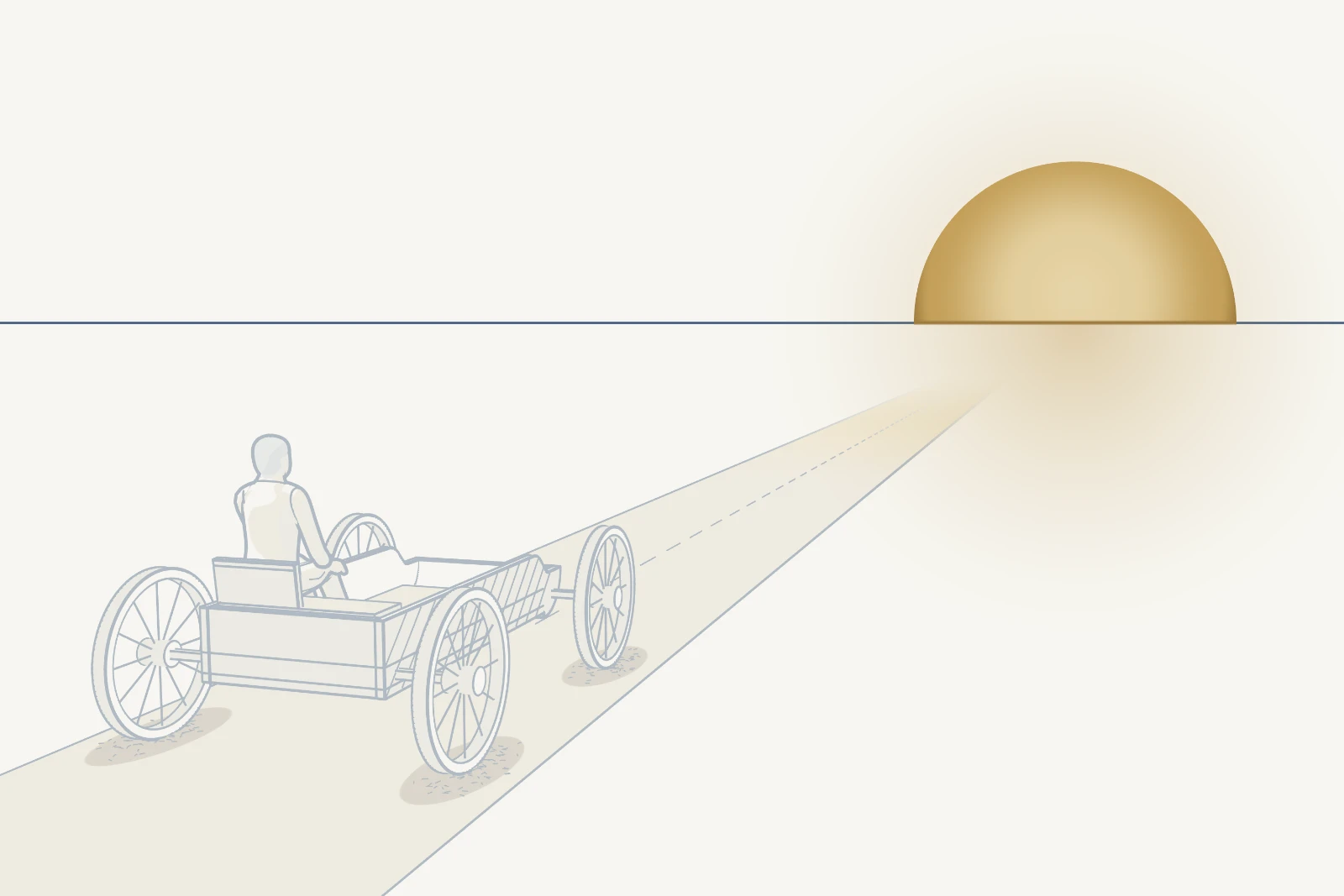
Together, we examined one of humanity’s oldest questions: Who am I?
Through the wisdom of Advaita Vedanta, Buddhism, Yoga, Jainism and Sikhism, we discovered that much of what we normally call “I” is a collection of changing experiences—our body, thoughts, emotions, memories, beliefs and conditioning.
Different traditions used different language, but they pointed us towards one common insight: much of our suffering comes from mistaking these changing experiences for our true identity.
That naturally brings us to the next question. If we do not clearly know who the Traveller is, can we really know what the Traveller is seeking?
Today we move to the second element of the Journey of Life. The Goal. And the answer may surprise you.
Happiness, Peace and Bliss
The first movement
Regardless of age, nationality, profession or culture, every choice we make is, in some way, an attempt to become happier or to avoid unhappiness.
We seek it through achievement. Through relationships. Through possessions. Through recognition. Through new experiences. And whenever we obtain something we desired, there is often a brief feeling of satisfaction. Life seems complete. For a moment.
But notice what happens next. Soon another desire appears. A new goal. A better house. Another promotion. More appreciation. Another achievement. The cycle begins again.
This is not because there is something wrong with us. It is simply the nature of desire-based happiness. Every fulfilled desire creates space for another. That is why even highly successful people often continue searching for something more.
If we observe our own experience honestly, we begin to realise something remarkable. Perhaps what we are seeking is not another object of happiness. Perhaps we are seeking freedom from the endless restlessness of always wanting the next one. That insight opens the door to a deeper possibility.
The turning point
Happiness usually depends upon circumstances. Something pleasant happens. Someone appreciates us. A goal is achieved. Life unfolds according to our expectations.
Peace is different. Peace depends less on what is happening outside us and more on how we relate to what is happening. This insight appears across all the traditions we have been exploring.
speaks about a quiet and disciplined mind.
speaks about calming the fluctuations of the mind.
teaches equanimity—the ability to remain balanced amidst life’s changing experiences.
speaks of inner balance that prevents fresh layers of conditioning from accumulating.
speaks of Sehaj—a natural state of inner ease that emerges as the grip of the ego relaxes.
Different traditions. One recognition. Peace is not the absence of challenges. It is the presence of inner stability in the midst of them.
Pain may still arise. Disappointment may still arise. But they no longer completely control our inner world. That is why peace is a far more dependable companion than happiness.
And yet… Even peace seems to come and go. Sometimes we experience it deeply. At other times it disappears. So the great traditions ask one final question.
Is there something even deeper than peace?
The deeper recognition
Perhaps while watching a beautiful sunrise. Listening to music. Holding a child. Sitting quietly in meditation. Lost in the state of flow.
For a brief moment, there is nothing missing. Nothing to achieve. Nothing to become. Just a profound sense of completeness. The wisdom traditions call this Bliss.
Not excitement. Not pleasure. Not an emotional high. But a quiet fullness that does not depend upon external circumstances.
Different traditions use different names. Vedanta calls it Ananda. Yoga speaks of the deepest freedom, Kaivalya. Buddhism points towards Nirvana. Sikhism speaks of Anand. Jainism describes the natural freedom of awakened consciousness. Again, different traditions. One human possibility.
And now we can connect today’s insight with what we discovered over the last two days. If the false identity creates restlessness… and if awareness remains untouched beneath that restlessness… then perhaps Bliss is not something we have to create. Perhaps it is something we gradually uncover. Like a clear mirror hidden beneath layers of dust. Or the open sky hidden behind passing clouds.
Tapas
Yesterday, we reflected on Vairagya—the freedom to engage fully with life without clinging to it. Today, we take the next step. Today’s value is Tapas.
Tapas is often translated as discipline, but that can sound harsh or restrictive. In reality, Tapas is something much simpler and far more empowering. It is the willingness to choose what serves your long-term growth over what merely satisfies an immediate impulse.
- Every time you pause before reacting…
- Every time you choose patience over anger…
- Every time you choose health over convenience…
- Or attention over distraction…
You are practising Tapas. It is not about becoming perfect. It is about making one conscious choice at a time.
Remember this simple principle: Small acts of discipline create lasting inner freedom.
Pause, Breathe, Choose
Whenever you notice yourself becoming irritated, impatient, anxious or emotionally reactive, don’t try to suppress the feeling. Simply pause. Take one slow, conscious breath. Then ask yourself:
“What response would my wiser self choose in this moment?”
Perhaps your response remains exactly the same. But now it comes from awareness rather than habit.
Practise this at least three times today.
What are we training today?
The Scientific Quadrant explains contemplative practices through current scientific understanding of psychology, behavioural science and neuroscience. The mechanisms described indicate how these practices may influence attention, emotional regulation, behaviour and wellbeing. Scientific understanding continues to evolve, and these explanations are not guarantees of specific outcomes. Individual experiences may vary.
Modern neuroscience suggests that much of our daily behaviour is shaped by systems designed to help us pursue rewards, avoid threats and seek what appears beneficial for survival and wellbeing. These systems are extremely useful. They help us learn, achieve and grow.
However, when we become trapped in a constant cycle of seeking the next achievement, possession or experience, the mind can remain restless even after success is achieved.
Today’s practices help train a different capacity: The ability to pause automatic pursuit and cultivate contentment, stability and conscious choice. Rather than being driven solely by impulse, we begin learning how to respond from awareness.
Today’s brain systems
Reward Network
The brain contains powerful reward pathways involving dopamine and related neurotransmitters. These systems motivate us to pursue goals, seek novelty and move toward desired outcomes. They are essential for growth and achievement, but they can also create an endless cycle of wanting more, even after previous goals have been reached.
Executive Control Network (ECN)
The Executive Control Network supports planning, self-regulation and conscious decision-making. It helps us pause before acting on impulses and choose behaviours that support long-term wellbeing rather than immediate gratification.
Salience Network
The Salience Network helps determine what deserves our attention. It acts as an internal switchboard, helping us notice important experiences arising in the body and mind and redirect attention when necessary.
Together, these systems influence whether we live reactively or intentionally.
How today’s practices train the brain
| Practice | Brain system trained | Likely result |
|---|---|---|
| Reflection on Happiness, Peace and Bliss | Reward Network & Executive Control Network | Greater awareness of the difference between temporary satisfaction and deeper fulfilment |
| Tapas (Inner Discipline) | Executive Control Network | Stronger capacity to choose long-term growth over immediate impulse |
| Pause, Breathe, Choose | Salience Network & Executive Control Network | Increased ability to interrupt automatic reactions and respond consciously |
| Nadi Shodhana & Belly-Focused Mindfulness | Attention, Emotional Regulation and Self-Regulation Systems | Greater calm, steadiness and reduced mental restlessness |
Brain Body Behaviour
| Level | What changes through practice? | What you may notice in daily life |
|---|---|---|
| Brain | Stronger self-regulation, improved attentional control and reduced impulsive responding | Greater ability to pause before reacting and make deliberate choices |
| Body | Better nervous-system balance, steadier breathing and reduced physiological stress activation | Increased calmness, relaxation and resilience during challenging situations |
| Behaviour | Less automatic pursuit of immediate rewards and more intentional decision-making | Better habits, healthier choices and greater consistency in actions aligned with personal values |
Why repetition matters
Every time you choose a conscious response over an automatic impulse, you strengthen neural pathways associated with self-regulation and wise decision-making. Every time you pause, breathe and choose deliberately, you reinforce the brain’s capacity to place awareness between impulse and action. This is neuroplasticity in action. Over time, repeated moments of conscious choice gradually transform occasional discipline into a stable way of living.
Day 3 scientific takeaway
Happiness often comes from obtaining what we want. Peace develops when we are no longer completely dependent on obtaining it. Today’s practices help train the brain to move from automatic pursuit toward conscious choice, creating the conditions for greater stability, contentment and inner freedom. The more often we pause, breathe and choose wisely, the less we are driven by habit and the more we are guided by awareness.
- Happiness needs circumstances; peace does not; Bliss is uncovered.
- Tapas: small acts of discipline create lasting inner freedom.
- Pause, Breathe, Choose creates space between impulse and action.
From understanding to experience
On Day One, we began asking, Who am I? On Day Two, we explored why we become identified with the false self. Today, we asked a new question: What is it that we are truly seeking?
Perhaps the deepest human longing is not simply for more happiness. Perhaps it is for a peace that is not dependent on circumstances… and ultimately for a deeper fullness that has always been present within us.
Understanding this intellectually is only the beginning. It must gradually become your own experience.
Today’s Nadi Shodhana will help balance and settle the nervous system. The Belly-Focused Mindfulness Meditation will train you to rest your attention in the present moment, allowing the mind to become quieter and steadier. Together, these practices begin cultivating exactly what we explored today—not the pursuit of another experience, but the discovery of an inner steadiness that is already available.
Tomorrow we move to the third element of the Journey of Life. If this is the Goal, then what is the Path? How should we organise our life so that every aspect of it supports this deeper journey?
Meditation — Belly-Focused Mindfulness
Guided audio — 15 minutesPress play on the meditation audio, sit comfortably, and simply practise.For now, allow today’s understanding to become tomorrow’s experience. Press play on today’s meditation.
Use the course meditation recording for the guided practice. The timer below is a quiet companion for practising on your own.