
Welcome back
Yesterday, we began exploring one of life’s deepest questions: Who am I? Today we continue that enquiry, and turn it inward. As on Day 1, read slowly, in one sitting if you can, and carry what you read into the rest of your day. The six segments follow the same shape as yesterday; the whole of Day 2, with the audio, takes about thirty minutes.
The shape of today
- Opening — Why does the false self feel so real?A return to the Journey of Life, and the question that carries Day 1 into Day 2.
- Spiritual — Three more traditions, one shared diagnosisYoga-Saankhya’s Seer, Jainism’s mirror, Sikhism’s Haumai.
- Philosophical — Value of the day: VairagyaNon-clinging: engage fully, hold lightly.
- Intentional activity — Finding the gapOne everyday situation, three steps, and a few lines to write.
- Scientific quadrant — DecenteringToday’s brain systems, and the second view of the TLM brain map.
- Closing — Knowledge shows the pathYogic Breathing, then the Relaxation Response Meditation.
- A quiet place where you can sit undisturbed, and a pen for the workbook pages.
- One everyday situation that usually produces a mild reaction — traffic, a delayed message, a difficult conversation — to watch for today.
- The Day 2 audio, for the end.
Life can get busy. Take more than 21 days if you need to; there is no need to rush. If you cannot move to the next day of TLM Basic, continue practising the Value of the Day, Intentional Activity and Meditation from the last day you completed. When you are ready, resume the programme from where you left off.
Why does the false self feel so real?
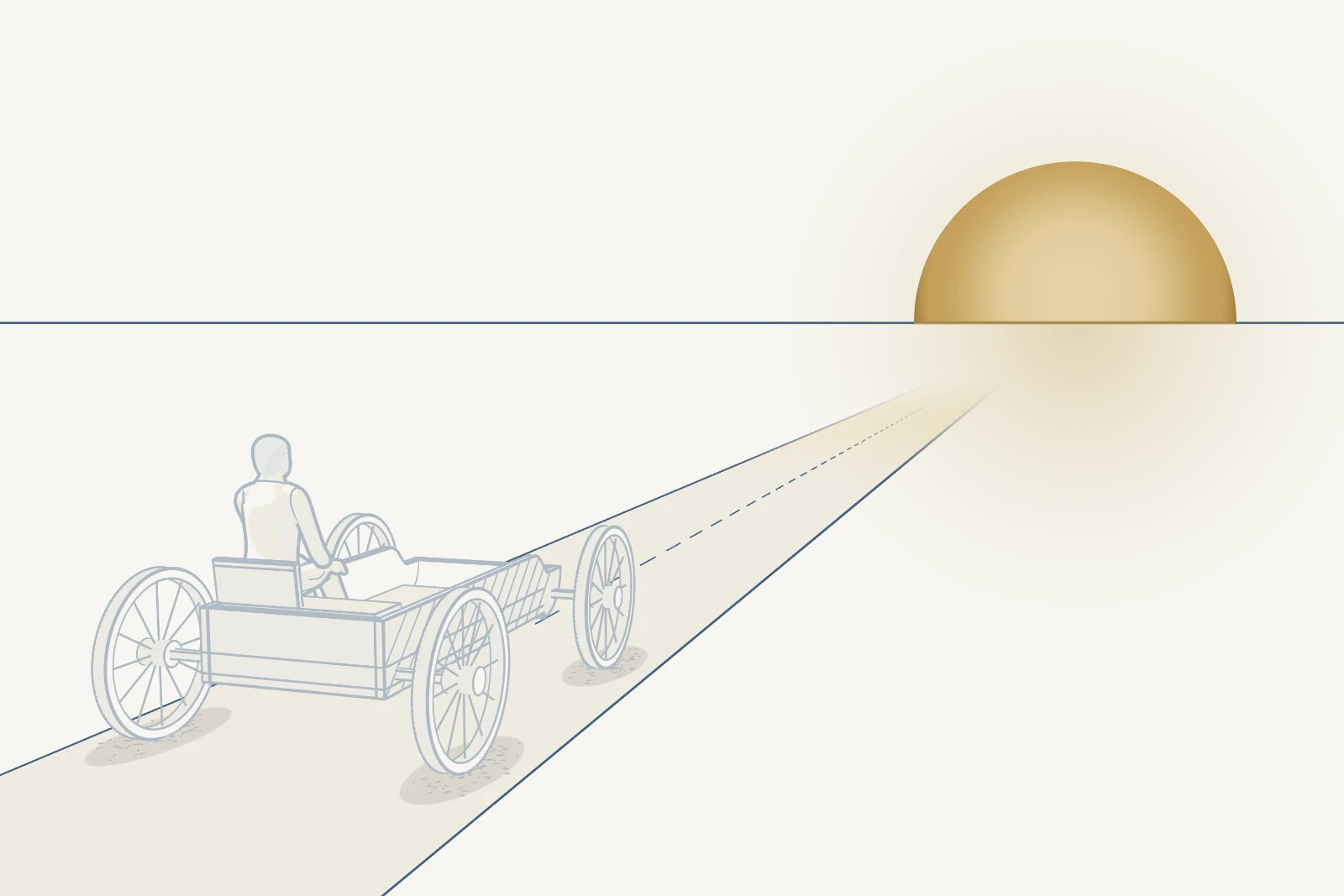
Advaita Vedanta reminded us that behind the changing body, thoughts and emotions is the unchanging Witness Awareness—the true Self that silently observes every experience.
Buddhism helped us understand why we usually fail to recognise this Witness. It showed us that what we call “I” is not a permanent entity but a continuously changing process. Thoughts, emotions and reactions arise so quickly that they create the powerful illusion of a solid, permanent self.
Different traditions. One human enquiry. Today we continue that enquiry.
Today, three more wisdom traditions—Yoga-Saankhya, Jainism and Sikhism—help us answer that question.
The Seer and the Seen
Everything that changes—our body, senses, thoughts, emotions, memories and personality—belongs to the changing field of experience.
But there is also the one who observes all these changes. Yesterday, Advaita Vedanta called this the Witness. Yoga-Saankhya calls it the Seer, or Purusha.
Different names. The same truth.
The problem begins when the Seer forgets its own nature and starts identifying with whatever it experiences. A thought appears and we say, “I am anxious.” An emotion appears and we say, “I am angry.” Instead of recognising anxiety and anger as passing experiences, we mistake them for our identity.
Yoga tells us that this misidentification is the root of suffering. Freedom begins when we remember a simple truth: I experience my thoughts. I experience my emotions. But I am not limited to either of them. The Seer remains untouched by whatever passes before it.
You may notice a similarity between today’s Yoga-Saankhya teaching and yesterday’s introduction to Advaita Vedanta. Both invite us to recognise that we are more than our thoughts, emotions and changing experiences. However, their emphasis is different. Advaita helps us discover the Witness—the awareness that observes experience. Yoga-Saankhya takes the next step and asks: If we are the Witness, why do we keep identifying with what we observe? It focuses on understanding this habitual misidentification and learning to loosen its hold. In this sense, Day 1 introduced the Witness; Day 2 explores why we forget it.
The mirror and the dust
Has the mirror lost its ability to reflect? No. Its true nature remains exactly the same. It is simply hidden beneath the accumulated dust.
Jainism says our deeper nature is like that mirror. It is never damaged. It is only obscured by years of conditioning, habitual reactions, attachments and fears. Every unconscious reaction adds another thin layer of dust.
Reflection and meditation do not create a new Self. They gradually remove what has accumulated over time. The purpose of inner work, therefore, is not self-improvement. It is self-discovery.
Haumai
It calls it Haumai. Haumai is the constant feeling of “I, me and mine.” It is the inner voice that keeps comparing, defending, competing and seeking approval. Whenever this contracted self feels threatened, emotions like anger, greed, attachment and pride naturally arise.
The problem is not that these emotions appear. The problem is that we completely identify with them. As awareness deepens, this contraction gradually softens. Our deeper nature begins to express itself more freely.
Vairagya
Vairagya is often translated as non-attachment, but it does not mean withdrawing from life or becoming indifferent. It means freedom from compulsive clinging.
You continue to love, but you do not possess. You continue to work sincerely, but you are not emotionally dependent on success alone. You enjoy pleasant experiences without demanding that they last forever. You face difficult experiences without believing they will last forever.
Vairagya allows us to engage fully with life while remaining inwardly free. When a craving arises, you notice it without immediately obeying it. When an unpleasant emotion arises, you allow it to pass without becoming consumed by it. This is not suppression. It is freedom.
Remember this simple principle: Engage fully. Hold lightly. That is Vairagya.
- Love without possessing.
- Work without becoming dependent on outcomes.
- Enjoy without clinging.
- Endure without resisting.
Engaged Non-Attachment (ENA)
ENA is
- Full presence in every role
- Action without egoic ownership
- Stability under pressure
- Giving fully; clinging to nothing
- Withdrawal from ego, not from duty
ENA is not
- Reduced involvement
- Emotional distancing
- Lowering of standards
- Indifference to outcomes
- Withdrawal from responsibility
Finding the gap
Choose one situation that usually produces a mild emotional reaction. Perhaps traffic. Perhaps a delayed message. Perhaps a difficult conversation. When it happens, practise three simple steps.
First, notice the sensation in your body
Become aware of what is happening inside you before you react.
Second, notice the story your mind immediately creates
Is it disrespect? Unfairness? Impatience? Simply observe the label without arguing with it.
Third, take one slow, conscious breath before responding
That single breath creates space. It allows awareness to guide your response instead of habit.
Decentering
The Scientific Quadrant explains contemplative practices through current scientific understanding of psychology, behavioural science and neuroscience. The mechanisms described indicate how these practices may influence attention, emotional regulation, behaviour and wellbeing. Scientific understanding continues to evolve, and these explanations are not guarantees of specific outcomes. Individual experiences may vary.
What are we training today?
We begin to recognise that thoughts, emotions, memories and reactions are experiences that arise within awareness—they are not the whole of who we are.
Modern psychology calls this capacity decentering: the ability to observe mental events without becoming completely identified with them. This capacity lies at the heart of many contemplative traditions and is strongly associated with emotional resilience, psychological flexibility and improved self-regulation.
Today’s brain systems
Default Mode Network (DMN). The Default Mode Network helps create our ongoing sense of self by weaving together memories, beliefs, personal narratives and future projections. This process is useful, but it can also lead us to become overly identified with the story we tell ourselves about who we are.
Executive Control Network (ECN). The Executive Control Network supports conscious attention, self-regulation and reflective choice. It helps us step back from automatic reactions and observe our thoughts more objectively.
Salience Network. The Salience Network acts as an internal monitor. It helps us notice important experiences arising within the mind and body and decide where attention should be directed.
Together, these networks help create the capacity to observe experience without becoming completely absorbed in it.
How today’s practices train the brain
| Practice | Brain system trained | Likely result |
|---|---|---|
| Seer and Seen reflection (Yoga-Saankhya) | Default Mode Network and Executive Control Network | Greater distinction between awareness and mental content |
| Vairagya (non-clinging) | Executive Control Network | Reduced compulsive attachment to thoughts, emotions and outcomes |
| Finding the Gap exercise | Salience Network and Executive Control Network | Improved ability to notice reactions before acting on them |
| Yogic Breathing and Relaxation Response Meditation | Attention and self-regulation systems | Increased calm, reduced emotional reactivity and greater decentering |
Effects on brain, body and behaviour
| Level | What changes through practice | What you may notice in daily life |
|---|---|---|
| Brain | Stronger self-awareness, improved attentional control, greater ability to observe mental events | Easier to recognise thoughts and emotions without immediately identifying with them |
| Body | Reduced stress activation, calmer breathing, improved nervous-system regulation | Greater physical ease and quicker recovery from emotional disturbances |
| Behaviour | Less impulsive reacting, greater emotional flexibility, more intentional responses | Improved relationships, better decision-making and reduced emotional overwhelm |
Why repetition matters
Every time you notice a thought, emotion or reaction and recognise, “This is an experience I am having, not the whole of who I am,” you strengthen the neural pathways associated with awareness, self-regulation and psychological flexibility. This process is an example of neuroplasticity—the brain’s ability to reorganise itself through repeated experience. Over time, repeated moments of observation gradually weaken automatic identification and strengthen conscious choice.
Today’s practices are not trying to eliminate thoughts or emotions. They are training your ability to experience them without becoming completely identified with them. The more often you observe rather than automatically identify, the greater your freedom to respond consciously rather than react habitually. That freedom is an essential step in the development of Inner Governance.
Knowledge shows the path
You have learnt that your thoughts, emotions and reactions are experiences. They are not your entire identity. But understanding alone is not enough. It must become a lived experience.
Today’s Yogic Breathing will further calm your nervous system, making it easier to notice the gap between experience and reaction. This will be followed by the Relaxation Response Meditation, a simple and scientifically validated practice that strengthens your ability to observe thoughts without becoming caught up in them.
In other words, today’s practices build exactly the capacity we have discussed today—the ability to witness, rather than automatically identify.
We move to the next great question. If we are not meant to spend our lives chasing one desire after another, then what is the true goal of life?
Meditation — Relaxation Response MeditationPress play on the meditation audio, sit comfortably, and simply practise.Remember this principle: Knowledge shows the path. Practice transforms the traveller. For now, press play on today’s meditation, and allow today’s understanding to become your experience.
Use the course meditation recording for the guided practice. The timer below is a quiet companion for practising on your own.
Notes for the Traveller
- The false self is a process, yet it feels real because we identify with whatever passes through awareness.
- Yoga-Saankhya: you are the Seer, not the seen. Clouds come and go; the sky remains.
- Jainism: your true nature is hidden, not lost. Inner work removes the dust; it does not create a new self.
- Sikhism: Haumai, the contracted “I, me and mine”, softens as awareness deepens.
- Vairagya: engage fully, hold lightly. Finding the gap: sensation, story, one breath.
- Decentering — observing thoughts and emotions without being them — is a trainable capacity, and an essential step in Inner Governance.