Welcome to Day 16
Today we turn to the second wheel of the Vehicle: Finances. Read the module slowly in one sitting; the two expert videos are optional, for when you have time.
The shape of today
- Opening — The second wheelThe Journey of Life, Artha, and the difference between possession and grip.
- The teaching — Five traditions on moneyVedanta, Buddhism, Jainism, Sikhism and Yoga; then what science adds.
- Value of the day — AparigrahaNon-possessiveness: using money without being used by it.
- Health segment — Financial healthThe moving reference point, and the question of enough.
- Expert insights (optional material)Two optional videos (about 36 minutes): the psychology of money, and scarcity.
- Intentional activity — Comparison vs sufficiencyOne moment of seeing, at some point today.
- Scientific quadrant and closingThe financially triggered brain; the Physiological Sigh and Open Awareness.
- A quiet place to read, and a pen for the reflection spaces.
- A phone or computer for the two optional videos (about 36 minutes).
- The Day 16 meditation audio.
Life can get busy. Take more than 21 days if you need to; there is no need to rush. If you cannot move to the next day of TLM Basic, continue practising the Value of the Day, Intentional Activity and Meditation from the last day you completed. When you are ready, resume the programme from where you left off.
The second wheel
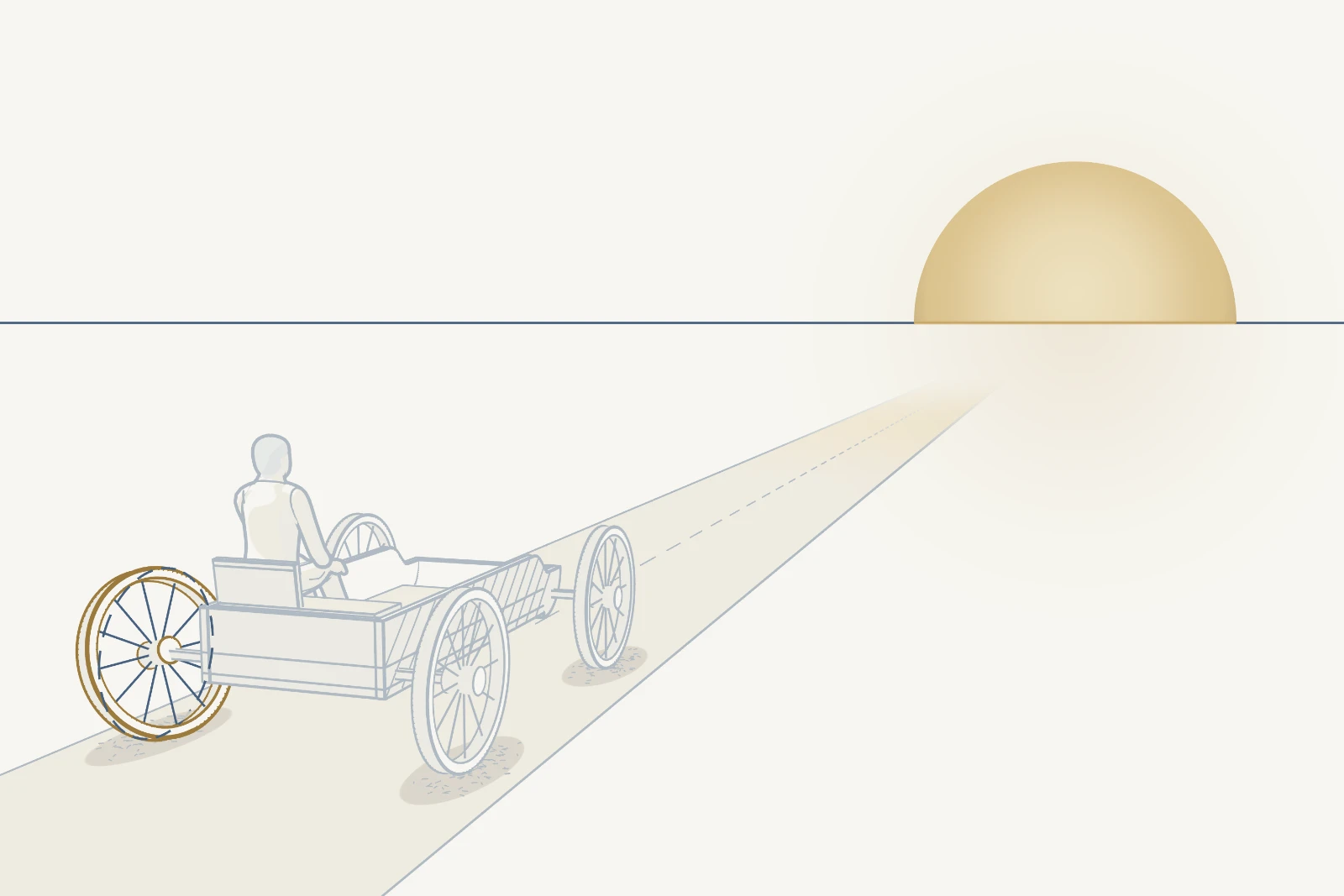
We are on Day 16 of TLM — Day 2 of Week 3.
Week 3 is the phase of primarily Purifying the Mind and Witnessing the Mind. Yesterday we explored how relationships reveal the condition of the mind. Today we turn to another powerful mirror: our relationship with money. Because few things expose our fears, desires, insecurities and attachments more quickly than finances.
But, before we go further, one thing must be said plainly.
In the Indian civilisational framework, money is not a lesser pursuit. It is not something to be embarrassed about, and it is not a distraction from spiritual life.
It is recognised as Artha — one of the four Purushārthas, the legitimate aims of human life, which we discussed in Week 1: Dharma. Artha. Kāma. Moksha.
All four have their place. And Artha, when pursued with honesty and proportion, can be a supporting condition for the inner life — not a threat to it.
So today’s question is not whether money matters. It clearly does. The question is:
From support to substitute.
From resource to measure of worth.
That is where the second wheel begins to wobble. And that is what we examine today.
Today’s exploration is not about how much you possess. It is about the quality of your relationship with what you possess.
Five traditions on money
Vedanta — Artha as support, not source
The Taittiriya Upanishad, in its Ananda Valli, speaks with remarkable honesty about the relationship between material prosperity and human happiness.
Among the conditions associated with the highest quality of human happiness available to a person in this life, it names youth, health, strength, learning, capability — and even wealth.
āśiṣṭho dṛḍhiṣṭho baliṣṭhaḥ
tasyeyaṃ pṛthivī sarvā vittasya pūrṇā syāt
sa eko mānuṣa ānandaḥThe passage describes one unit of human happiness through the image of an ideal young person—learned, disciplined, resolute and strong—with the whole earth and its wealth at his disposal.
This is important. The Upanishadic tradition does not pretend that material security is irrelevant. A life lived in chronic insecurity, scarcity or financial fear does not easily support clarity, steadiness or deeper enquiry.
That distinction is crucial. Money can create conditions that support a meaningful life. But money cannot become the meaning of that life.
Buddhism — Right Livelihood, not right poverty
The Buddha approached money with a similar clarity. Samyak Ājīva — Right Livelihood — is an integral part of the Noble Eightfold Path.
Buddhism does not teach that money corrupts simply because it exists. It asks us to examine how we earn, how we relate to what we have, and what we cling to.
Money earned without violating our values is very different from money earned at the cost of our integrity.
The healthy Finances wheel therefore does not demand poverty. It asks that livelihood does not fragment the inner life.
Jainism — Asteya and the greed of comparison
Jain philosophy identifies another subtle source of financial suffering. Alongside Aparigraha — non-hoarding, it speaks of Asteya.
Asteya is usually translated as non-stealing. In the context of our financial life, it also invites us to examine the desire to possess what is not rightfully ours.
Think about what comparison can do.
- Someone else’s income becomes a measure of our own adequacy.
- Someone else’s house makes ours feel insufficient.
- Someone else’s lifestyle creates a desire for what we had never previously needed.
The mind begins to appropriate psychologically what does not belong to it.
Greed rarely comes only from genuine need. Very often, it comes from comparison and fear.
Sikhism — Earn, hold, share
Sikh wisdom brings another dimension to financial life.
Kirat Karni — earn honestly, through one’s labour and skill. And Vand Chhakna — share what one has.
Money is not an end in itself. It can become a flow — received honestly, used responsibly and shared generously.
Yoga — Aparigraha
And this brings us to today’s central value: Aparigraha.
Patanjali places Aparigraha among the five Yamas in the Yoga Sutras.
The same principle appears in different forms across the wisdom traditions: non-clinging, non-hoarding, freedom from compulsive acquisition.
Despite their different philosophical foundations, these traditions offer complementary ways to examine our relationship with possessions, desire and responsibility.
And this is where ancient wisdom meets modern science.
What science adds
Research by Sendhil Mullainathan, Eldar Shafir and other scholars suggests that financial scarcity can direct attention towards urgent needs and make it harder to attend to competing demands. The strength and nature of these effects vary across circumstances and studies.
When the mind is dominated by the question: “Will I have enough?” attention is pulled toward that question. Planning can become harder. Other demands may be neglected.
The problem is therefore not simply the amount of money. It is the mental relationship with not-enough.
And this gives us an important insight:
A person can have very little money and yet experience a degree of inner sufficiency. Another person can have considerable wealth and remain trapped in financial anxiety.
The numbers alone do not determine the experience. The reference point matters.
Aparigraha
Aparigraha does not ask you to give up ambition. It does not ask you to avoid responsibility. It does not ask you to feel guilty about wealth. And it does not ask you to judge those who have more.
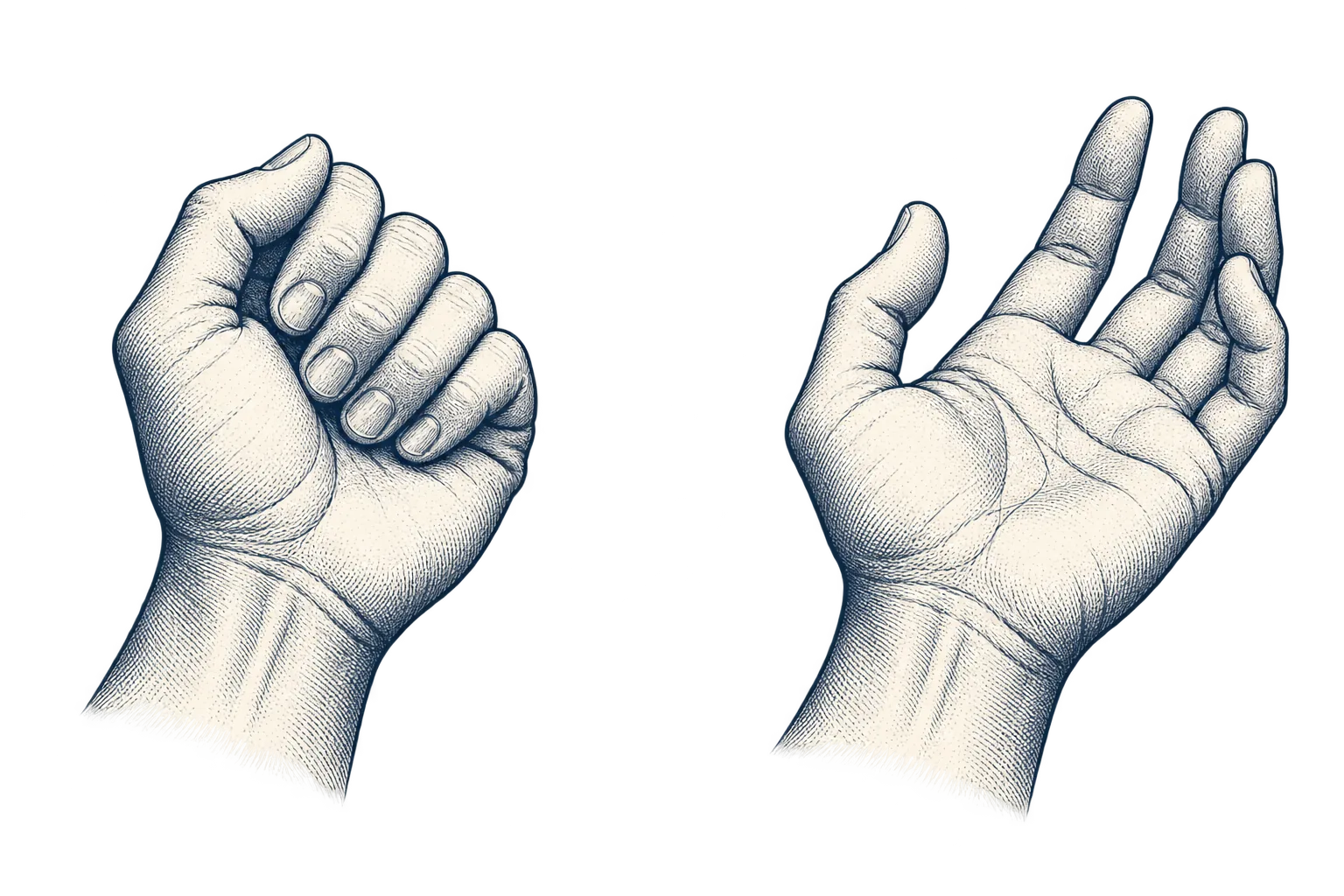
Aparigraha opposes not prosperity but compulsion. It addresses not the amount — but the grip.
So the question Aparigraha places before the Finances wheel is very precise:
Or is the anxiety of not enough deciding on your behalf?
Aparigraha means using money as a means, not as emotional insurance. It means earning, saving and planning responsibly — without constant inner anxiety. It means recognising the difference between need-based sufficiency and fear-based accumulation.
And it means being able to say, quietly and honestly:
Aparigraha is also the Finances-wheel expression of ENA — Engaged Non-Attachment.
The Traveller who practises Aparigraha earns fully, plans responsibly and saves wisely — fully engaged in the financial wheel without becoming enslaved by the anxiety of more.
The wheel turns steadily. The Traveller is not consumed by it.
Financial health
Financial security can make an important contribution to wellbeing, particularly when basic needs are not reliably met. The relationship between income and wellbeing is complex, however, and varies with circumstances. More money does not automatically resolve comparison, anxiety or the feeling that one never has enough.
Financial health, like physical health, has upstream factors that operate silently long before a crisis appears. Much of the damage is done not in dramatic moments, but in the accumulated pattern of how the mind relates to money every day.
Research suggests that financial scarcity preoccupation can make decision-making worse — not because the person lacks intelligence or information, but because anxiety can draw attention towards urgent worries and away from other demands.
And there is another pattern I have observed repeatedly.
I have seen people with very modest incomes who carry remarkably little financial anxiety because their sense of sufficiency is anchored in something real and genuinely theirs.
And I have seen people with substantial wealth who live in persistent financial agitation because their reference point keeps shifting. Every time they reach the level they imagined would bring ease, a new comparison appears.
The anxiety has little to do with the numbers. It has to do with whether sufficiency is internally defined or externally borrowed.
So perhaps one of the most important financial questions is not:
That question does not eliminate financial responsibility. It makes financial responsibility more intelligent.
This is precisely why Aparigraha matters. The challenge is not earning or possessing. The challenge is believing that lasting fulfilment lies just beyond the next acquisition.
Two expert resources
Both deepen what we have explored today. They are optional Deep-Dive resources, not part of the core lesson.
The Psychology of Money (by Morgan Housel)
Morgan Housel explores the psychology of money — including the phenomenon of never enough, and why financial behaviour is often more important than financial knowledge.
Solving Social Problems with a Nudge
Sendhil Mullainathan explains what scarcity does to cognitive bandwidth and decision-making.
Comparison vs sufficiency
Today’s Intentional Activity is an observation exercise, not a financial exercise. It is designed to help you see Aparigraha operating in an ordinary moment.
- Step 1 — Notice a moment of comparison
At some point today, notice one moment when you compare your income, spending, savings or lifestyle with someone else. It may be a passing thought. A social-media scroll. A conversation. Or simply a feeling of being subtly behind.
Do not analyse it. Do not correct it. Simply notice: Comparison is happening. - Step 2 — Pause without changing anything
Allow a brief pause. Do not force gratitude. Do not justify your situation. Do not make a decision. Simply allow the pause.
The purpose is not to improve your behaviour. It is to restore awareness. - Step 3 — Ask one question
Ask yourself quietly:
“If comparison were removed entirely, would what I have feel sufficient right now?”
Do not answer immediately. Let the question sit. There is no right response. The question itself is the practice. - Step 4 — Return to the day
Resume whatever you were doing. Do not draw conclusions. Do not deliberately carry the question forward. One moment of seeing is enough.
You are not trying to change your financial situation today. You are trying to see the mind’s relationship with it more clearly.
That seeing is Aparigraha beginning.
Why enough can remain elusive
The Scientific Quadrant explains contemplative practices through current scientific understanding of psychology, behavioural science and neuroscience. The mechanisms described indicate how these practices may influence attention, emotional regulation, behaviour and wellbeing. Scientific understanding continues to evolve, and these explanations are not guarantees of specific outcomes. Individual experiences may vary.
Adaptation
One of the most consistent findings in psychology is that human beings adapt remarkably quickly to improvements in circumstances. What initially feels like a major gain often becomes normal sooner than expected. The mind adjusts its expectations and begins looking toward the next target. This is sometimes called adaptation, and it helps explain why the feeling of “enough” can remain elusive even when external conditions improve.
This connects directly with today’s value of Aparigraha. Non-possessiveness is not primarily about owning less. It is about not allowing our sense of wellbeing to become permanently attached to the next acquisition, the next comparison or the next financial milestone.
When money becomes linked with identity, status or security, financial events can trigger the same emotional systems that respond to many other perceived threats. The amygdala contributes to vigilance and anxiety, the insula helps register feelings of gain, loss and uncertainty, while the prefrontal cortex supports reflection, perspective and wise decision-making.
One purpose of practices such as Aparigraha, Open Awareness and conscious reflection is to strengthen our ability to respond from awareness rather than from automatic emotional activation.
How today’s practices help
Today’s Intentional Activity invites you to observe comparison as it arises. The purpose is not to eliminate ambition. It is to see how often dissatisfaction comes not from what we have, but from what we imagine others have.
The Physiological Sigh you will practise shortly helps calm the activation that often accompanies financial anxiety.
Open Awareness meditation develops a complementary skill. As thoughts, desires and worries arise, you will practise allowing them to appear and pass without immediately grasping or resisting them.
Over time, this trains an important capacity: the ability to experience a desire without becoming compelled by it.
Day 16 scientific takeaway
Today’s traditions, scientific research and practices offer complementary perspectives on one insight:
- Artha is a support, not the source, of Ananda: money can support a meaningful life but cannot become its meaning.
- The problem is not possession but grip; greed comes less from need than from comparison and fear.
- Financial scarcity can direct attention towards urgent needs; the reference point, not the number, shapes the experience.
- Aparigraha is using money as a means, not as emotional insurance: “This is enough for now.”
From grip to clarity
The Finances wheel does not damage the Vehicle through lack of money alone. It is damaged through the quality of the mind’s relationship with money: through comparison that never resolves, anxiety that persists regardless of the numbers, and the compulsion to accumulate as a defence against an uncertainty that can never be completely eliminated.
It asks you to fear less.
That shift — from a grip-based relationship with money to a clarity-based one — is the maintenance this wheel requires.
And tomorrow, we take this same wisdom into another deeply human domain: our relationships with other people in work space.
Your meditation is ready.
Meditation — Open AwarenessPress play on the meditation audio, sit comfortably, and simply practise.The Physiological Sigh will help settle the system. Open Awareness will allow you to experience the quality of non-grasping that Aparigraha points toward — not as an idea, but as a lived capacity.
Use the course meditation recording for the guided practice. The timer below is a quiet companion for practising on your own.