
Welcome to Day 14
Today closes Week 2. There is no new ground to cover: read slowly, pause wherever the module invites you to, and let the fourteen days settle. Keep a pen nearby, and close with the Day 14 meditation.
The shape of today
- Opening and Part I — What has actually been builtThe Panchakosha, the seven values, and the health and meditation journeys.
- Part II — ENA milestone: where you now standThe Seven Stages of Inner Governance; Inner Governance and ENA.
- Part III — A civilisational understandingIndia’s wisdom traditions and modern neuroscience: points of convergence and difference.
- Value of the day — SantosaContentment: the capacity to rest in adequacy after sincere effort.
- Health integration and today’s activitiesThe health arc complete; Recognising Readiness; revisiting the Four Wheels.
- Scientific quadrant and the Week 2 Origins ChartThe brain systems involved in practice, and the sources behind Week 2.
- Closing — the bridge into Week 3Nadi Shodhana and the Body Scan; Week 3 begins tomorrow.
- A quiet place to read, and a pen for the reflections and the Four Wheels.
- Your Day 1 and Day 6 Wheel of Life scores, if you kept them.
- The Day 14 meditation audio.
Life can get busy. Take more than 21 days if you need to; there is no need to rush. If you cannot move to the next day of TLM Basic, continue practising the Value of the Day, Intentional Activity and Meditation from the last day you completed. When you are ready, resume the programme from where you left off.
Today we pause
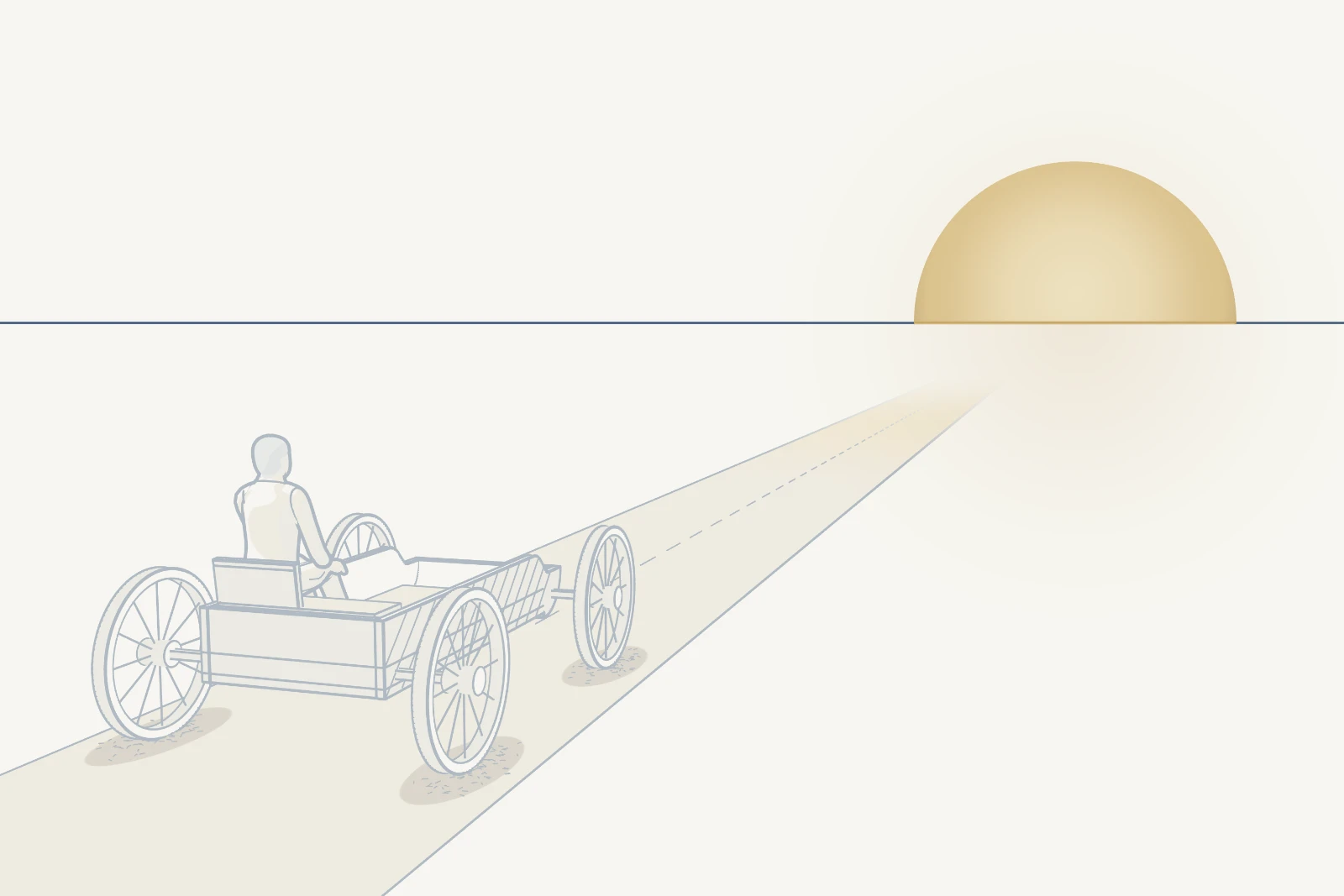
Today we do not cover new ground. Today we pause.
We look back—not simply at what you have learnt, but at what has begun to change within you.
We recognise what has been built. We understand where you now stand on the Journey of Life. And we prepare to step into Week 3 with a steadier body, a more cooperative mind, and a clearer sense of where this journey is leading.
This is not the end of Week 2. It is the recognition that something genuine has begun.
Over the past fourteen days, you have been engaged in a systematic process of training the Instrument. Through reflection, meditation, values-based living and health practices, meaningful foundations have already been laid. Today is an opportunity to recognise that progress before taking the next step.
What has actually been built this week
Week 2 was called The Instruments. During this week, you worked with the body and the mind—the instruments through which the Traveller experiences life. Every practice, every reflection, and every meditation was designed to make those instruments steadier, healthier, and more cooperative.
The framework — Panchakosha
We began with the Panchakosha, the five sheaths described in the Taittiriya Upanishad. Rather than seeing yourself as a single physical body, you explored a layered human system: the physical body, the energy body, the mental body, the intellectual body, and the bliss body.
This week focused on the first four. Days 8 to 10 focused on strengthening the physical instrument through movement, nutrition, sleep, and understanding the silent progression of disease. Days 11 to 13 worked with breath, attention, emotional resilience, and the governing intelligence of the mind.
Today brings all of these together into one integrated understanding.
The seven values
Alongside this, you practised seven values, each adding a different quality to the Instrument.
- Ahimsa taught care.
- Uparama taught wise withdrawal from excess.
- Titiksha taught patient endurance.
- Samādhāna cultivated inner steadiness.
- Sati developed mindfulness.
- Shaucham brought inner cleanliness and resilience.
- And today, Santosa allows all of this effort to settle into quiet contentment.
Together, these values have shaped not just what you know, but how you increasingly meet life.
The health journey
The health journey also followed a deliberate progression.
We began by understanding the body—cardiovascular disease, cancer, neurodegeneration, movement, nutrition, and sleep—not as isolated topics, but as the foundations of a well-maintained Instrument.
We then turned inward to chronic stress, discovering that the biology of stress is shaped not only by circumstances but also by the meaning the mind assigns to those circumstances.
Finally, we explored resilience—not as toughness, but as the trained capacity to recover. You learnt why the brain naturally clings to difficulty, and how attention, awareness, and inner cleanliness gradually shorten the path back to balance.
The journey has been clear:
The meditation journey
Your meditation practice followed the same progression.
Each breathing practice prepared the nervous system in a different way—from regulation, to calming, to energising, and finally to balance.
Each meditation trained a complementary capacity—from simple awareness of breathing, to deep relaxation, to returning attention whenever it wandered.
None of these practices were isolated techniques. Together they formed a systematic training programme for the body, the mind, and attention itself.
When you look back over this week, you can see that it has never been about collecting information. It has been about building an Instrument that is healthier, steadier, and more capable of meeting life with clarity.
That is what you have actually built.
Where you now stand
Over the last fourteen days, you have already begun moving through several stages of training the mind.
The Seven Stages of Inner Governance
- Stage 1: Understand the Mind
Week 1 introduced the nature of the Instrument, the Panchakosha framework and the patterns that shape human experience.
- Stage 2: Calm the Mind
Breathing practices, meditation and reflection have helped begin the process of reducing mental agitation and increasing inner steadiness.
- Stage 3: Train Attention and Focus
Meditation, awareness exercises and intentional activities have begun strengthening your ability to direct and sustain attention.
- Stage 4: Move Attention at WillBeginning
Recent teachings on resilience, mental clutter and attention recovery and meditation practice of Body Scan have introduced the possibility of consciously redirecting attention rather than being governed by it.
- Stage 5: Purify the MindUnderway
For fourteen days, you have reflected upon and practised values from the wisdom traditions. These values gradually weaken unhelpful tendencies and strengthen healthier patterns of thought and behaviour. Purification is already underway.
- Stage 6: Witness the MindEmerging
Moments of meditation and self-observation may already have revealed an important insight: “I can observe my thoughts rather than be completely controlled by them.” These moments are the beginnings of witnessing.
- Stage 7: Transcend the MindFuture Possibility
The final stage unfolds through deeper practice and inquiry. TLM Seeker programme will take you deeper into Stage 7.
A civilisational understanding
The work you have done with the body and the mind is not a modern self-improvement programme. Nor is it the insight of a single tradition.
Across the great wisdom traditions of India, separated by centuries and often by very different philosophies, one remarkable understanding appears again and again:
Advaita Vedanta
The Katha Upanishad gives us the beautiful image that has accompanied us throughout TLM.
The body is the chariot. The senses are the horses. The mind is the reins. The intellect is the charioteer. The Self is the Traveller.
If the horses are uncontrolled, the reins weak, or the chariot neglected, even the wisest Traveller cannot reach the destination.
Week 2 has been the care of that chariot.
The shared wisdom
The Bhagavad Gita calls this Yoga—skill in action—the ability to engage fully without being driven by agitation.
Patanjali describes it as calming the unnecessary fluctuations of the mind so perception becomes clear.
The Buddha reminds us that experience is shaped by the condition of the mind itself.
Jain philosophy teaches that restraint lightens the mind by preventing unnecessary accumulation.
Sikh wisdom expresses the same truth simply:
Different languages.
Different traditions.
One shared understanding.
The convergence with science
What is extraordinary is that these traditions arrived at this understanding through careful observation of human experience over many centuries.
Modern neuroscience offers complementary evidence about attention, emotional regulation and the effects of repeated practice.
Research suggests that some forms of repeated practice can influence neural processes involved in attention and emotional regulation. The effects vary with the practice, the person and the study; the charioteer is a useful metaphor for the role of executive control.
Contemplative traditions offer frameworks developed through sustained observation and practice. Neuroscience investigates some related processes using empirical methods. Their perspectives can inform one another without being identical.
That is why Week 2 matters
You have not simply learnt a collection of health practices or meditation techniques. You have begun training the very instrument through which every experience of life is lived.
That understanding belongs not to one teacher or one tradition. It belongs to humanity’s accumulated wisdom.
Santosa
It is a fitting value for an integration day.
Patanjali expresses it beautifully in the Yoga Sutras:
This ease is not excitement. It is not the pleasure of achieving another goal. It is the quiet recognition that, in this moment, nothing more needs to be added.
That is why Santosa belongs at the end of Week 2.
For two weeks you have learnt, reflected, practised and meditated. Today is an opportunity not to strive for more, but to recognise what has already begun.
Let the body settle.
Let the mind settle.
Allow the week’s work to become part of you.
And from that quiet sufficiency, we begin the next stage of the journey.
The arc complete
We began with the body.
Many chronic conditions develop over time, sometimes before symptoms become apparent. Movement, nutrition, sleep and appropriate preventive healthcare all contribute to maintaining the body.
That is why movement, nutrition and sleep are not optional lifestyle choices. They are the maintenance of the Instrument itself.
We then moved inward to chronic stress, discovering that it is not only events that shape our biology but also the meaning we give to those events.
Finally, we arrived at resilience. Not as toughness. Not as suppressing emotion. But as the trained capacity to recover.
That entire journey can be summarised in three steps:
Maintain the body.
Understand the mind.
Train recovery.
The Panchakosha and modern science describe this journey in different languages. But they point toward the same human reality:
Recognising Readiness
Today’s Intentional Activity is called Recognising Readiness.
- First, notice the body. Does it recover a little more easily than it did two weeks ago? Not perfectly. Just a little.
- Next, notice the mind. Does attention return a little sooner when it wanders? Is there a little less inner noise? Again, you are not looking for perfection. You are recognising direction.
- Finally, acknowledge one simple truth: For today, this is enough.
That is Santosa. Recognition allows integration. Carry that quiet confidence with you into Week 3.
Revisiting the Four Wheels of Life
On Day 1 and Day 6, you reflected upon the four wheels of your Vehicle:
- Relationships
- Work and Profession
- Finances
- Values and Ethics
Your scores for these four wheels are personal self-ratings on a 1–10 scale, not an objective test. Scores may rise, remain unchanged or fall; the purpose is awareness, not a required improvement.
Your Wheel of Life
Record your scores from 1 to 10. Your entries are saved in this browser and gathered in your notebook.
Your earlier checkpoints
A dash means no score has been saved here.
Today, pause for a few minutes and revisit those reflections. Without judging yourself, ask:
- Has my perception of any of these areas changed?
- Have the practices of the last seven days influenced how I approach any of these areas?
- Which wheel currently feels strongest?
- Which wheel would benefit most from greater attention in Week 3?
There is no right or wrong answer. The purpose of this exercise is awareness, not evaluation.
You will revisit these reflections again at the end of the programme and observe what has changed across the full twenty-one-day journey.
What has actually been happening inside the brain?
The Scientific Quadrant explains contemplative practices through current scientific understanding of psychology, behavioural science and neuroscience. The mechanisms described indicate how these practices may influence attention, emotional regulation, behaviour and wellbeing. Scientific understanding continues to evolve, and these explanations are not guarantees of specific outcomes. Individual experiences may vary.
Over the past fourteen days, you have meditated, reflected, practised values, exercised the body, observed the breath, trained attention and responded more consciously to life’s challenges.
At first glance, these may appear to be separate activities. Neuroscience suggests otherwise.
Although the practices have been different, many of them have been strengthening the same underlying systems in the brain—systems responsible for attention, emotional regulation, self-awareness, resilience and wise decision-making.
In other words, TLM has not simply been a collection of practices. It has been a systematic process of training the brain.
The brain systems you have been training
| Brain region / network | Associated practices | Functions supported |
|---|---|---|
| Prefrontal Cortex | Reflection, intentional action, values practice | Self-regulation, judgement, impulse control |
| Amygdala | Meditation, resilience training, emotional awareness | Reduced emotional reactivity |
| Hippocampus | Reflection, learning, meditation | Learning, memory and contextual understanding |
| Insula | Breath awareness, body scan, mindfulness | Interoception and self-awareness |
| Executive Control Network | Attention training practices | Focus and cognitive control |
| Salience Network | Mindfulness and self-observation | Detecting what matters in the present moment |
| Default Mode Network | Meditation and witnessing practices | Processes associated with self-referential thought and mind wandering; meditation effects vary by practice and individual. |
Over the last fourteen days, these systems have been repeatedly exercised through different practices and intentional activities.
From reactivity to response
One of the most important shifts explored during Week 2 has been the movement from automatic reaction toward conscious response.
Repeated practice can help some people notice impulses and create more opportunity to choose their response.
This is one of the foundations of emotional resilience, wise decision-making and self-regulation.
Why change often feels invisible
The changes created by these practices are usually subtle at first.
You may not yet feel dramatically different from the person who began this journey fourteen days ago. That is perfectly natural.
Neural pathways strengthen gradually through repetition. Behaviour changes incrementally. Habits form quietly. Identity shifts slowly.
Some changes in habits and patterns of response may develop gradually before their effects become obvious in daily life.
The neuroscience of Inner Governance
From the perspective of TLM, every meditation, value practice, health habit, reflection and intentional action has been a small act of Inner Governance.
You have been learning:
- to govern attention rather than be governed by distraction,
- to regulate impulses rather than react automatically,
- to choose values rather than conditioning,
- to respond consciously rather than habitually.
Repeated practice can contribute to changes in behaviour and, through neuroplasticity, to changes in the brain.
This process is known as neuroplasticity—the brain’s capacity to change in response to repeated experience.
Week 2 Origins Chart
The Origins Chart brings together everything you have encountered during Week 2—the values, health science, breathing practices, meditations, intentional activities, and the traditions and researchers from which they come.
You do not need to study this chart today. Simply know that it is available whenever you wish to explore these ideas more deeply.
TLM is not one person’s philosophy. It is humanity’s accumulated understanding of how to live well, brought together into one practical framework.
This chart distinguishes traditional texts and lineages, contemporary educational sources, and empirical research. Inclusion does not imply that every practice has the same level of scientific validation.
| Practice / content | Origin · Source · Authority |
|---|---|
| Values — Week 2 arc | |
| Ahimsa — Non-harm (Day 8) | Yoga Sutras 2.30 (Patañjali); Jain tradition (first Mahāvrata); Buddhist Śīla. Related ethical frameworks, not identical formulations. |
| Uparama — Wise withdrawal (Day 9) | Advaita Vedānta; related to Uparati within the ṣaṭ-sampatti (sixfold discipline) tradition; Śaṅkara’s Vivekacūḍāmaṇi. |
| Titiksha — Forbearance (Day 10) | Vedānta ṣaṭ-sampatti; Bhagavad Gītā 2.14; related Buddhist themes of upekkhā (equanimity) and khanti (patience); Jain kṣamā; Sikh dhīraj. Angela Duckworth’s grit research is a modern comparison, not the source of the traditional value. |
| Samādhāna — Steadiness (Day 11) | Advaita Vedānta; ṣaṭ-sampatti; Śaṅkara’s Vivekacūḍāmaṇi. Related modern research: Amishi Jha’s work on attention and mindfulness. |
| Sati — Mindfulness (Day 12) | Satipaṭṭhāna Sutta (Majjhima Nikāya 10; also Dīgha Nikāya 22); Buddhist mindfulness traditions, including Theravāda and Mahāyāna. Appamāda (heedfulness) appears in Dhammapada 21 but is not the direct textual citation for Sati. |
| Shaucham — Inner cleanliness (Day 13) | Yoga Sutras 2.40–41 (Patañjali); Bhagavad Gītā 13.7; related Jain and Sikh traditions of purification. Modern complementary sources: cognitive defusion and mindfulness-based approaches; Lucy Hone’s applied resilience work. |
| Santosa — Contentment (Day 14) | Yoga Sutras 2.42 (Patañjali); Yoga Niyamas. Buddhist upekkhā may be a point of comparison, not an exact synonym. |
| Health content — research anchors | |
| Cardiovascular health (Day 8) | Dariush Mozaffarian and Tufts Friedman School of Nutrition Science and Policy; broader evidence on cardiovascular prevention and lifestyle-related risk. |
| Cancer and neurodegeneration (Day 9) | Lisa Mosconi’s research and public scholarship on brain health and Alzheimer’s disease. Peter Attia’s The Drive is supplementary educational material, not a primary research citation. |
| Movement, diet and sleep (Day 10) | Kelly Starrett and Juliet Starrett, Built to Move (Knopf, 2023); Matthew Walker, Why We Sleep (2017). |
| Stress biology (Day 11) | Robert M. Sapolsky, Why Zebras Don’t Get Ulcers; Lisa Feldman Barrett’s research and scholarship on emotion. |
| Stress mindset and meaning (Day 12) | Crum, Salovey & Achor, “Rethinking Stress: The Role of Mindsets in Determining the Stress Response,” Journal of Personality and Social Psychology 104(4), 716–733 (2013), doi:10.1037/a0031201. The paper examines stress mindsets. |
| Inner cleanliness and resilience (Day 13) | Lucy Hone’s applied resilience work; Rick Hanson, Hardwiring Happiness; Killingsworth & Gilbert, “A Wandering Mind Is an Unhappy Mind,” Science 330 (2010), doi:10.1126/science.1192439; Amishi Jha, Peak Mind (2021) and research on attention. Each source supports a different topic. |
| Pranayamas — Week 2 arc | |
| Box Breathing 4:4:4:4 (Day 8) | Paced/tactical breathing practices and research on controlled breathing and stress regulation. |
| 4-7-8 Breathing (Days 9–11) | Andrew Weil’s popularised 4-7-8 method; broader pranayama tradition and research on slow-paced breathing. Slow breathing may influence autonomic regulation. |
| Kapal Bhati (Days 12–13) | Classical Hatha Yoga tradition; Hatha Yoga Pradipika and traditional ṣaṭkarma (cleansing practices). |
| Meditations — Week 2 | |
| Ānāpānasati (Days 8, 11, 13) | Ānāpānasati Sutta, Majjhima Nikāya 118; Buddhist breath-mindfulness tradition. MBSR, developed by Jon Kabat-Zinn, is a modern programme that also uses mindfulness of breathing; it is not the origin of the Buddhist practice. |
| Body Scan (Days 9, 10, 12, 14) | Body scanning is used in Mindfulness-Based Stress Reduction (MBSR), developed by Jon Kabat-Zinn, and has parallels with body-awareness practices in Vipassanā traditions. Related but not identical in method or context. Empirical anchor: Sparacio et al., “Self-administered mindfulness interventions reduce stress in a large, randomized controlled multi-site study,” Nature Human Behaviour 8, 1716–1725 (2024), doi:10.1038/s41562-024-01907-7. This study found reductions in short-term self-reported stress. |
| Intentional activities — Week 2 | |
| Ahimsa self-audit (Day 8) | Positive psychology and self-compassion research; Kristin Neff’s research and resources on self-compassion. |
| Panchakosha reflection (Day 9) | Taittirīya Upaniṣad; Advaita Vedānta. This is a contemporary course adaptation, not a claim that the Upaniṣad prescribes this exact exercise. |
| Patient consistency (Day 10) | Acceptance and Commitment Therapy (ACT), associated with Steven C. Hayes; Kristin Neff’s self-compassion research. Complementary modern frameworks. |
| Inner settledness (Day 11) | ACT and cognitive defusion (Steven C. Hayes and colleagues); mindfulness-based cognitive therapy (MBCT), including Segal, Williams and Teasdale, Mindfulness-Based Cognitive Therapy for Depression (2002). |
| Stress-supportive action (Day 12) | Kelly McGonigal, The Upside of Stress; Alia J. Crum and colleagues’ research on stress mindset; research on social connection and resilience. |
| Inner cleanliness (Day 13) | MBCT; ACT cognitive defusion; Shaucham, Yoga Sutras 2.40–41; Lucy Hone’s applied resilience work, including the helping-or-harming question. |
| Recognising Readiness (Day 14) | Course-designed reflection informed by positive psychology; Santosa, Yoga Sutras 2.42. This is a course activity, not a named intervention from a specific research study. |
- Week 2 worked the first four sheaths of the Instrument: body, breath, mind and intellect.
- Stages 1–3 are complete; Stage 4 is beginning, Stage 5 is underway, and Stage 6 is emerging.
- India’s wisdom traditions emphasise preparing the human instrument; neuroscience offers complementary insights into attention and self-regulation.
- Santosa: rest in adequacy after sincere effort. For today, this is enough.
- Change grows beneath the surface before it becomes visible, one repetition at a time.
Into Week 3
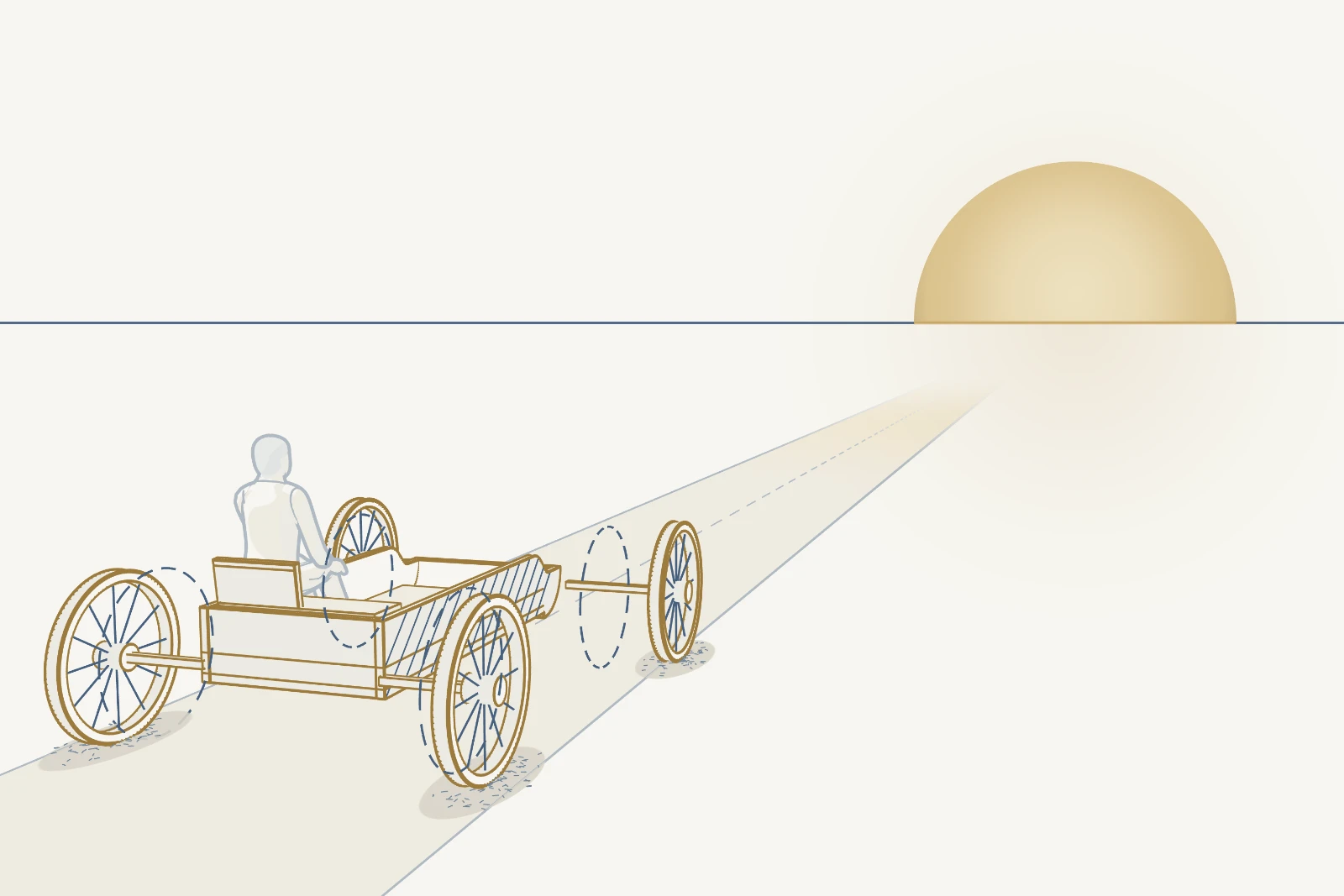
During Week 1 you received the map. You discovered the Traveller, clarified the Goal, understood the Path through the Purusharthas, explored the Vehicle, and saw Engaged Non-Attachment as the destination of the journey.
During Week 2 you prepared the Instrument through which that journey is lived. You cared for the body. You trained attention. You learnt to understand stress rather than fear it. You discovered resilience as the capacity to recover. And through Santosa, you allowed all of that effort to settle into quiet confidence.
You have not simply collected ideas. You have begun changing the way you meet life.
Week 3
Now the journey enters a new phase.
Until now, we have been preparing. From tomorrow, life itself becomes the classroom.
Week 3 explores the four wheels of the Vehicle through which every human life is actually lived: Relationships. Finances. Work. Values and Ethics.
These are the places where our conditioning becomes visible. Not because life is against us. But because life is our greatest teacher.
Meditation — Body Scan
Guided audio — 15 minutesPress play on the meditation audio, sit comfortably, and simply practise.Welcome to Week 3.
Use the course meditation recording for the guided practice. The timer below is a quiet companion for practising on your own.