Welcome to Day 10
Welcome to Day 10. Read how the wisdom traditions and modern science agree on the wise way to care for the body, then take the Maintenance Audit into your day.
The shape of today
- Orientation: the Instrument on the JourneyTwo days on why the body deserves care; today, how to maintain it.
- The wise way to care for the bodyThe Pancha Kosha, the Middle Way, Mitāhāra and Seva: one shared message.
- Titiksha: forbearanceValue of the day: the patient endurance that turns healthy choices into habits.
- The body as a maintenance systemThree pillars, then two expert videos (optional material).
- The Maintenance AuditIntentional activity: three honest questions, one modest improvement.
- Scientific quadrant, meditation and reflectionWhy habits outlast motivation; 4-7-8 Breathing and a Body Scan; your notes.
- The Day 10 meditation audio: settling, 4-7-8 Breathing, a Body Scan and a short closing.
- About thirty minutes for the two expert videos on movement and on sleep; the sleep talk is strongly recommended before Day 11.
- Five quiet minutes for the Maintenance Audit, and a pen for its questions and the reflection page.
Life can get busy. Take more than 21 days if you need to; there is no need to rush. If you cannot move to the next day of TLM Basic, continue practising the Value of the Day, Intentional Activity and Meditation from the last day you completed. When you are ready, resume the programme from where you left off.
The next natural step
Today we take the next natural step. We ask a practical question:
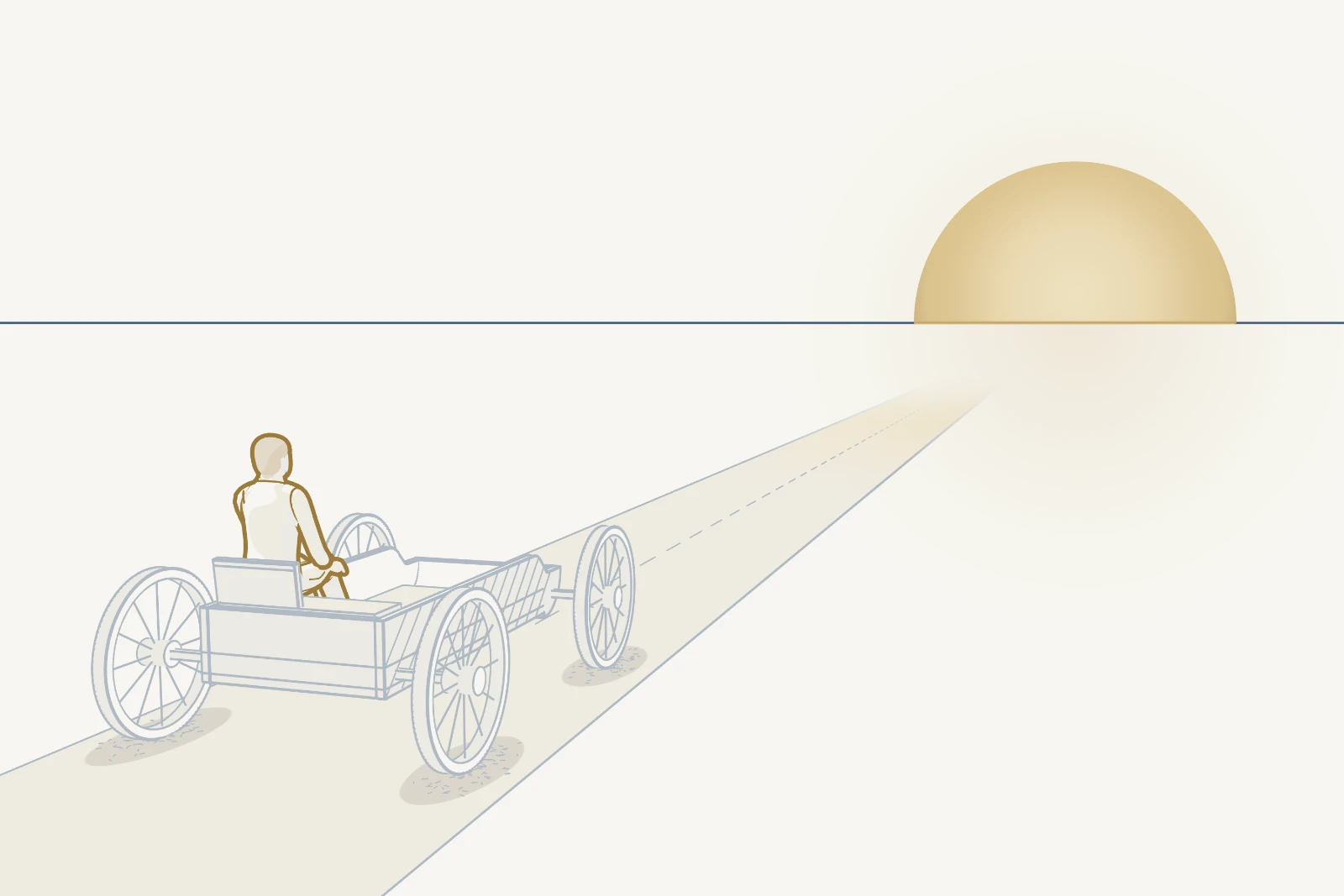
Like every well-designed system, the body does not ask for perfection. It asks for consistent maintenance. Today’s lesson is about understanding that maintenance.
The wise way to care for the body
We focused on the outermost sheath, the Annamaya Kosha—the physical body. Our conclusion was simple. The body is not who we are. But it is the Instrument through which we learn, work, love, serve, and grow. Neglecting it makes every higher pursuit more difficult.
The physical body, however, does not function in isolation. The Annamaya Kosha is closely connected with the Pranamaya Kosha, the vital sheath associated with the body’s vital functions, including breathing. This vital dimension also provides an important link between the body and the mind—a connection we will explore when we turn to the mental Instrument in the coming days.
Today, we continue to focus on the Annamaya Kosha and ask a different question: how can we care for the physical Instrument in a balanced and sustainable way? Yesterday we discovered that health is built steadily through prevention. Today we explore the practical wisdom that allows that prevention to become a sustainable way of living.
Not why should we care for it—that was yesterday. Today we ask:
Across the wisdom traditions, the answer is remarkably consistent.
The Buddha: the Middle Way
The Buddha arrived at it through direct experience. Before his enlightenment, Buddha had lived in luxury as a prince. Later, in search of truth, he practised severe austerities, pushing his body almost to the point of collapse. Having experienced both extremes, he realised that neither indulgence nor self-denial leads to wisdom.
From this insight emerged the Middle Way. Applied to daily life, the Middle Way teaches us that the body flourishes through balance. Not excess. Not deprivation. Not obsession. Simply intelligent, sustainable care.
Yoga: Mitāhāra
The Yoga tradition teaches Mitāhāra—moderation in food and lifestyle. It reminds us that health is sustained not by excess or deprivation, but by balance. Eating a little less than greed demands, resting enough without becoming idle, exercising without exhausting the body, and living with moderation create the conditions for both physical vitality and mental clarity. In Yoga, balance is not merely a health strategy; it is a spiritual discipline.
The Sikh tradition: Seva
The Sikh tradition teaches Seva—selfless service. But meaningful service begins with a capable instrument. A body weakened through neglect cannot serve family, society or humanity effectively. Caring for ourselves is therefore not selfish; it is part of preparing ourselves to serve others with energy, steadiness and compassion.
Three traditions. Three different languages. One shared message.
Titiksha
Over the last three days, we have been quietly building a sequence of values. On Day 8, we reflected on Ahimsa—recognising that neglecting the body is a subtle form of self-harm. On Day 9, we explored Uparama—stepping back from unnecessary excess so the body and mind have space to recover. Today we complete this three-day arc with Titiksha—patient endurance, another value from Advaita Vedanta.
Every worthwhile habit asks something of us before it rewards us.
- Exercise may feel uncomfortable before it becomes enjoyable.
- Nutritious food may seem less tempting than instant gratification.
- Going to bed on time may require saying no to one more episode on OTT or one more hour on the phone.
The benefits come later. Titiksha is the quiet strength that helps us stay with these choices long enough for them to become part of who we are. It reminds us that lasting health is rarely created by dramatic effort. It is created by small actions, repeated patiently, day after day.
The body as a maintenance system
Think about any machine that serves you well. A car. An aircraft. A piece of medical equipment. None of them remain reliable through neglect. They perform well because they are maintained consistently. Our body is no different.
Remarkably, almost everything required to maintain it can be grouped into just three daily practices: Movement. Nutrition. Sleep. These are not three independent health topics. They are three parts of one integrated maintenance system.
The first is movement. The human body evolved to move. Walking, lifting, reaching, bending and changing posture are not forms of exercise alone—they are the conditions under which the body functions best. Modern life has dramatically reduced everyday movement. We spend long hours sitting, travelling, working at desks and looking at screens. Over time, this quiet reduction in movement contributes to loss of strength, reduced mobility, poorer metabolic health and increased risk of chronic disease. Movement is not simply about fitness. It is one of the body’s essential maintenance signals.
The second pillar is nutrition. Food is not merely a source of pleasure. It is the raw material from which the body repairs itself. Every meal provides—or fails to provide—the building blocks required to maintain muscles, bones, blood vessels, hormones and the immune system. Rather than thinking constantly about diets, it is often more helpful to ask a simpler question:
The third pillar is sleep. Many people think of sleep as the end of the day. Biologically, it is the beginning of recovery. During sleep, the body supports tissue repair, memory consolidation and hormonal regulation. Sleep also appears to support processes involved in clearing waste products from the brain. Without adequate sleep, even good nutrition and regular exercise cannot deliver their full benefits.
These three pillars work together. Movement stimulates adaptation. Nutrition provides the materials. Sleep completes the repair. Neglect any one of them, and the effectiveness of the other two is reduced.
Health is therefore not built through occasional dramatic effort. It is built through ordinary daily maintenance.
Health develops silently.
Maintenance happens silently too.
Wisdom and science
Today’s teaching explored a simple but powerful principle: the body does not ask for perfection. It asks for consistent maintenance. The wisdom traditions remind us that the body is an instrument entrusted to our care. Modern science arrives at a remarkably similar conclusion. Long-term health is rarely determined by occasional heroic efforts. It is more often shaped by ordinary daily behaviours repeated consistently over time.
The following expert insights explore two of the most important pillars of maintaining the Instrument: movement and sleep. As you watch, notice how both experts repeatedly return to the same idea we explored today: small actions, practised consistently, often matter more than dramatic interventions.

Movement as a daily practice
Kelly and Juliet Starrett are among the world’s most influential advocates of practical movement and physical resilience. Their work emphasises a simple message: the human body is designed to move, and many of the problems we associate with ageing are actually consequences of reduced movement rather than ageing itself.
As you watch, reflect on how movement functions not as exercise alone, but as daily maintenance for the Instrument.
Reflection
Which aspect of your daily movement routine deserves the greatest attention right now?

Sleep: the foundation of recovery
Dr Matthew Walker is one of the world’s leading sleep scientists. His research has helped transform our understanding of sleep from a passive state into one of the most important biological processes supporting health, learning, recovery and emotional wellbeing.
As you watch, notice how sleep is not merely rest. It is one of the primary maintenance systems through which the body and brain repair, regulate and prepare themselves for the next day.
Reflection
What is one practical change that could improve the quality or consistency of your sleep?
Before moving to today’s Intentional Activity, pause for a moment. The wisdom traditions teach that the Instrument must be cared for. Movement helps maintain it. Sleep helps restore it. Together they remind us that health is not built through occasional bursts of effort. It is sustained through simple practices repeated day after day.
The body does not ask for perfection. It asks for consistent maintenance. Carry that reflection into today’s Intentional Activity.
The Maintenance Audit
Today’s practice is called The Maintenance Audit. Without judging yourself, ask three simple questions:
The Maintenance Audit
Keep the improvement deliberately modest.
- A ten-minute walk.
- One healthier meal.
- Going to bed thirty minutes earlier.
Behavioural science of health and wellbeing
The Scientific Quadrant explains contemplative practices through current scientific understanding of psychology, behavioural science and neuroscience. The mechanisms described indicate how these practices may influence attention, emotional regulation, behaviour and wellbeing. Scientific understanding continues to evolve, and these explanations are not guarantees of specific outcomes. Individual experiences may vary.
Why habits matter more than intentions
Most people understand what supports health. They know that movement is beneficial. They know that good nutrition matters. They know that sleep is important. Yet knowing and doing are often very different things.
Behavioural science suggests that long-term health is influenced less by occasional motivation and more by habits—actions that become sufficiently familiar that they require less conscious effort. A healthy life is rarely the result of a few extraordinary decisions. It is more often the result of ordinary decisions repeated consistently over time.
The power of automaticity
When a behaviour is repeated in a stable context, it can gradually become easier to perform. Researchers sometimes refer to this process as automaticity.
At first, a morning walk requires effort. At first, going to bed on time requires discipline. At first, choosing a healthier meal requires conscious attention. But repetition can gradually reduce the mental effort required. What initially feels difficult can eventually become part of one’s normal routine.
How today’s practices support habit formation
| Practice | Behavioural function supported |
|---|---|
| Reflection on the Instrument | Greater awareness of the need for maintenance |
| Titiksha | Persistence when healthy habits feel inconvenient |
| Maintenance Audit | Identification of one area requiring attention |
| Breathing and Meditation Practice | Increased awareness of automatic patterns and impulses |
Small actions become identity
Behavioural science suggests that lasting change often occurs when behaviours are no longer seen as isolated actions. Instead, they become part of one’s identity.
- A person does not merely exercise. They become someone who moves regularly.
- A person does not merely prioritise sleep. They become someone who values recovery.
- A person does not merely eat well. They become someone who cares for their Instrument.
Over time, repeated actions can begin shaping self-perception, and self-perception can begin reinforcing action.
Brain Behaviour Health
| Level | What may develop through practice? | What you may notice |
|---|---|---|
| Brain | Stronger habit pathways through repetition | Less reliance on motivation |
| Behaviour | Greater consistency in health-supporting actions | Healthy choices becoming more automatic |
| Health | Accumulation of maintenance behaviours | Improved resilience and wellbeing over time |
Scientific takeaway
Motivation comes and goes. Discipline fluctuates. Habits tend to endure. The goal of health is not to become perfect. The goal is to make healthy behaviours sufficiently consistent that they become part of everyday life. The body does not ask for perfection. It asks for consistent maintenance. Every healthy habit is a small investment in the future condition of the Instrument.
- The body does not ask for perfection. It asks for consistent maintenance.
- One message from three traditions: balanced stewardship of the body.
- Movement, nutrition and sleep: one system on three pillars, kept by habit.
Lifelong acts of maintenance
On Day 8, we learnt that caring for the body is an expression of Ahimsa—non-harm. On Day 9, we discovered that health and disease both develop quietly over time, making prevention far wiser than cure. Today, we have explored how that care becomes a daily practice through three simple pillars: movement, nutrition, and sleep.
These are not occasional projects. They are lifelong acts of maintenance. The body does not ask us for perfection. It asks for consistency.
Every healthy meal. Every walk. Every good night’s sleep. Every time we choose long-term wellbeing over short-term convenience, we strengthen the Instrument through which every aspect of our life is lived.
Tomorrow, our attention shifts inward. We move from maintaining the physical Instrument to understanding the mental Instrument. The body prepares the ground. The mind determines the direction.
Meditation — Body Scan
Guided audio — 15 minutesPress play on the meditation audio, sit comfortably, and simply practise.Your meditation is waiting. Press play.
Use the course meditation recording for the guided practice. The timer below is a quiet companion for practising on your own.